
Shades of Purple

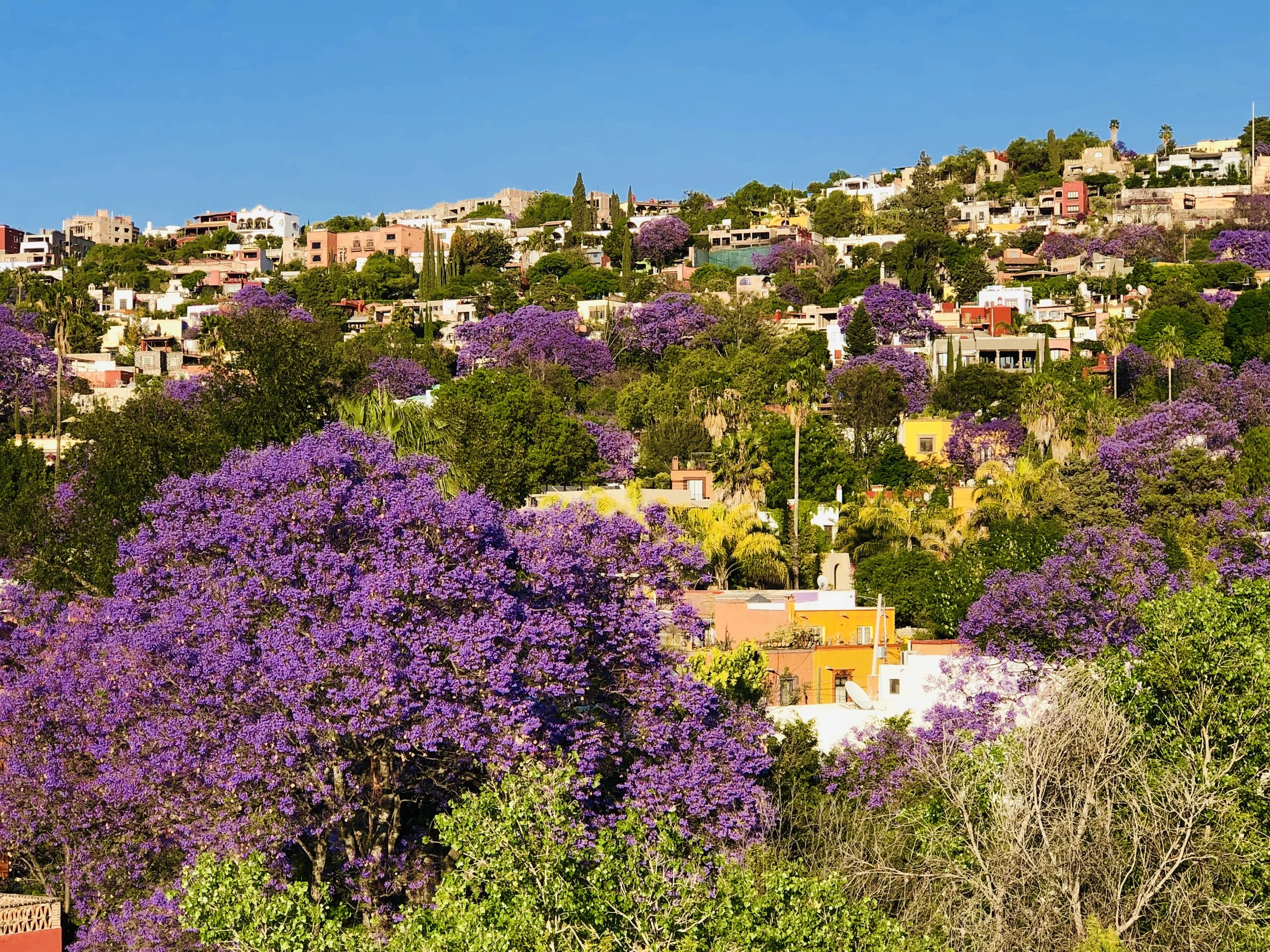
One of many jacarandas in the historic centro of san miguel
Upon greeting April in San Miguel de Allende, Mexico, we continue to revel in the lavender colored blooming jacaranda trees. Like cherry blossom trees in Washington, DC, they grace the town. As a bonus here, we can also appreciate them, ever so briefly from rooftops as they blanket the surrounding hills.
Another dimension for this color exists however. From my perspective, colors used in religious rituals and traditions can appear interwoven with, and almost mirroring, the natural world.
Thus, we discover, at the other end of the purple color spectrum, dark blue/deep purple/aubergine shades are celebrated during Semana Santa. Adopted as liturgical colors, they are emblematic of both majesty and redemption. In the ancient world, in particular Phoenicia, Tyrian purple dyes were made from the secretion of Murex snails. Extracting the dye involved thousands of snails and intensive labor. No surprise that the dyes and hence fabrics were reserved for royalty, the elite and ultimately the Church.
Below: the Virgin de los Dolores (Our Lady of Sorrows) enveloped in a dark blue cloak with a purple velvet background. As a symbol of her purity are white Easter lilies.
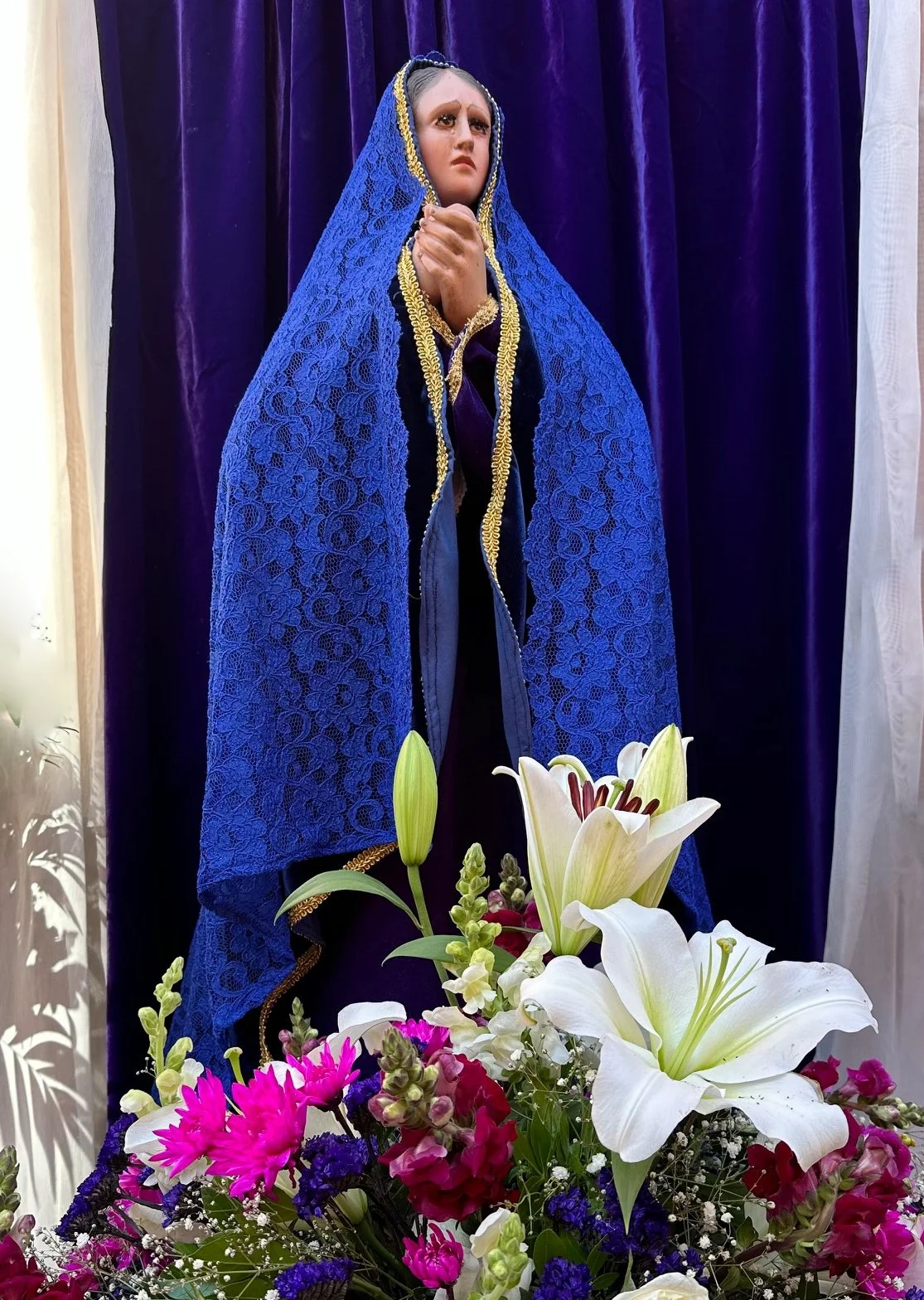
Virgin of Sorrows
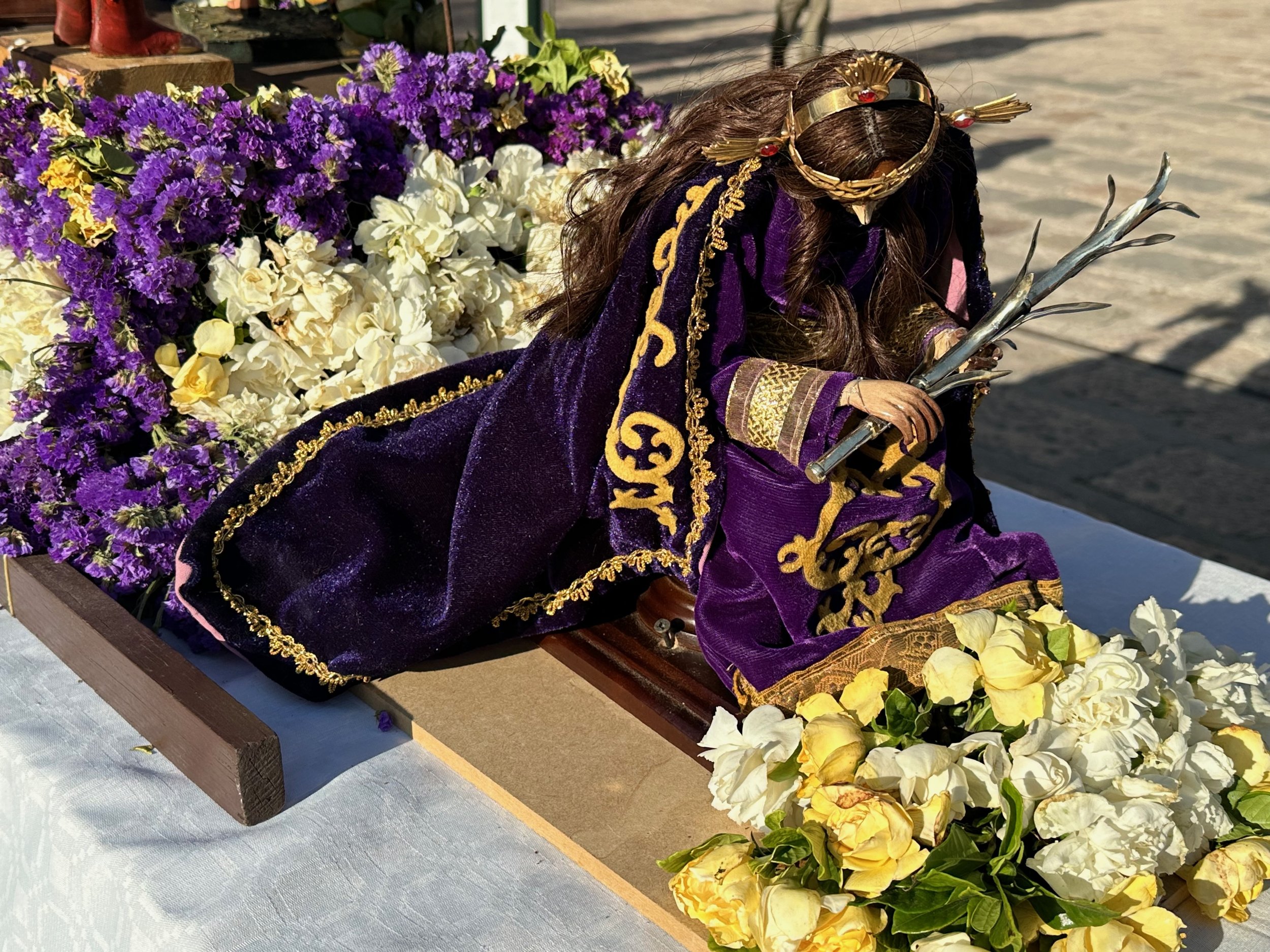
Much symbolism resides in the color purple for both European royalty and Christianity. The merging of the two primary colors: red and blue brings about a transformation, in particular, redemption. Purple is associated with penance, prayer and personal sacrifice. And while purple may signify pain and mourning, it is ultimately associated with the celebration of Christ’s resurrection. Below, on Easter, Jesus Christ is cloaked in purple — but with another element. Embroidered with gold, his attire represents mockery by the Romans who display him as a king wearing a royal color but with a crown of thorns.
But, getting back to nature… With the Equinox, the Jacaranda mimosifolia offers a sense of rebirth. Its mauve flowers emerge, almost magically, on a barren tree. Like a white or pale pink dogwood or magnolia in bloom, its foliage only pops out later. No competition with green leaves makes for an even more stunning statement.

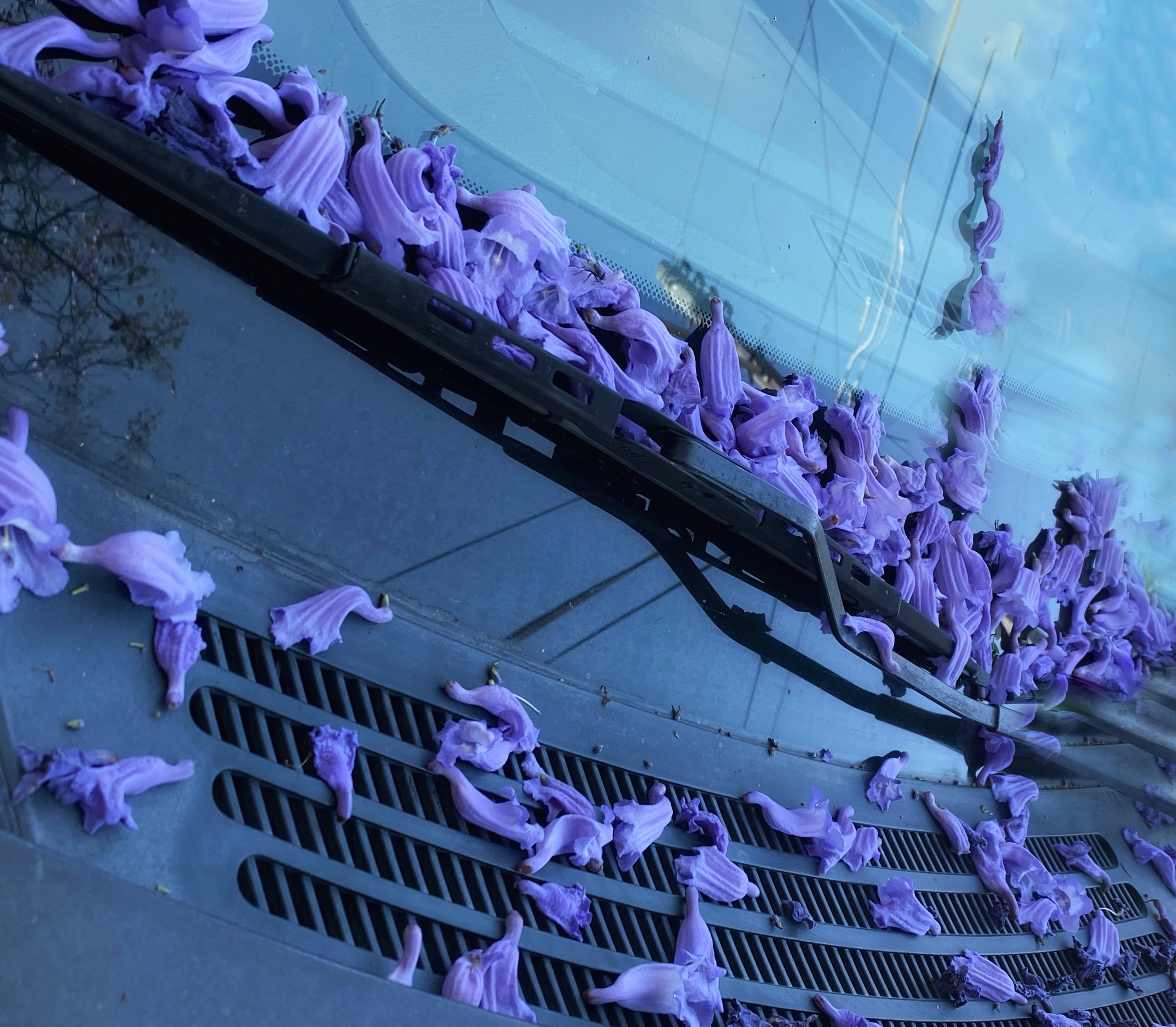
Sadly, the delicate petals quickly succumb to gusts of wind — a common phenomenon in this high-altitude environment with daily transitions from warm days to cool nights. Sidewalks, streets, car windshields, even one’s hair become “decorated.” As the author, Alberto Ruy Sanchez, so fittingly wrote: “when the jacaranda flowers fall, the sky blooms on the ground.”
From my own poetic perspective, there is a certain synchronicity with the cultural calendar here in Mexico. Below, is a street carpeted with dyed sawdust, fresh yellow, scented chamomile and oranges. (Chamomile, once used in pagan rituals is believed to enhance positive energy, joy and calmness.) Cloaked in a deep purple velvet robe is the bereft Virgin Mary.

Unlike royalty or religion however, jacarandas are spread all about. Contrasting with shacks or a car repair garage are some of the most glorious ones in town.


Like Christianity, jacarandas were also “imported”, in this case, from South America. The Japanese imperial landscape designer, Tatsugoro Matsumoto, living in Peru, was invited by the Mexican president, Porfirio Diaz in the early 20th century to embellish Chapultepec and the Roma district in the capital. Later, when asked to replicate Washington DC’s cherry tree allées (a former gift from Japan to DC in 1912), Matsumoto, an experienced horticulturist said: “no way”. Climate zones cannot be altered by political decree…
Below, a few more photos I couldn’t resist including!
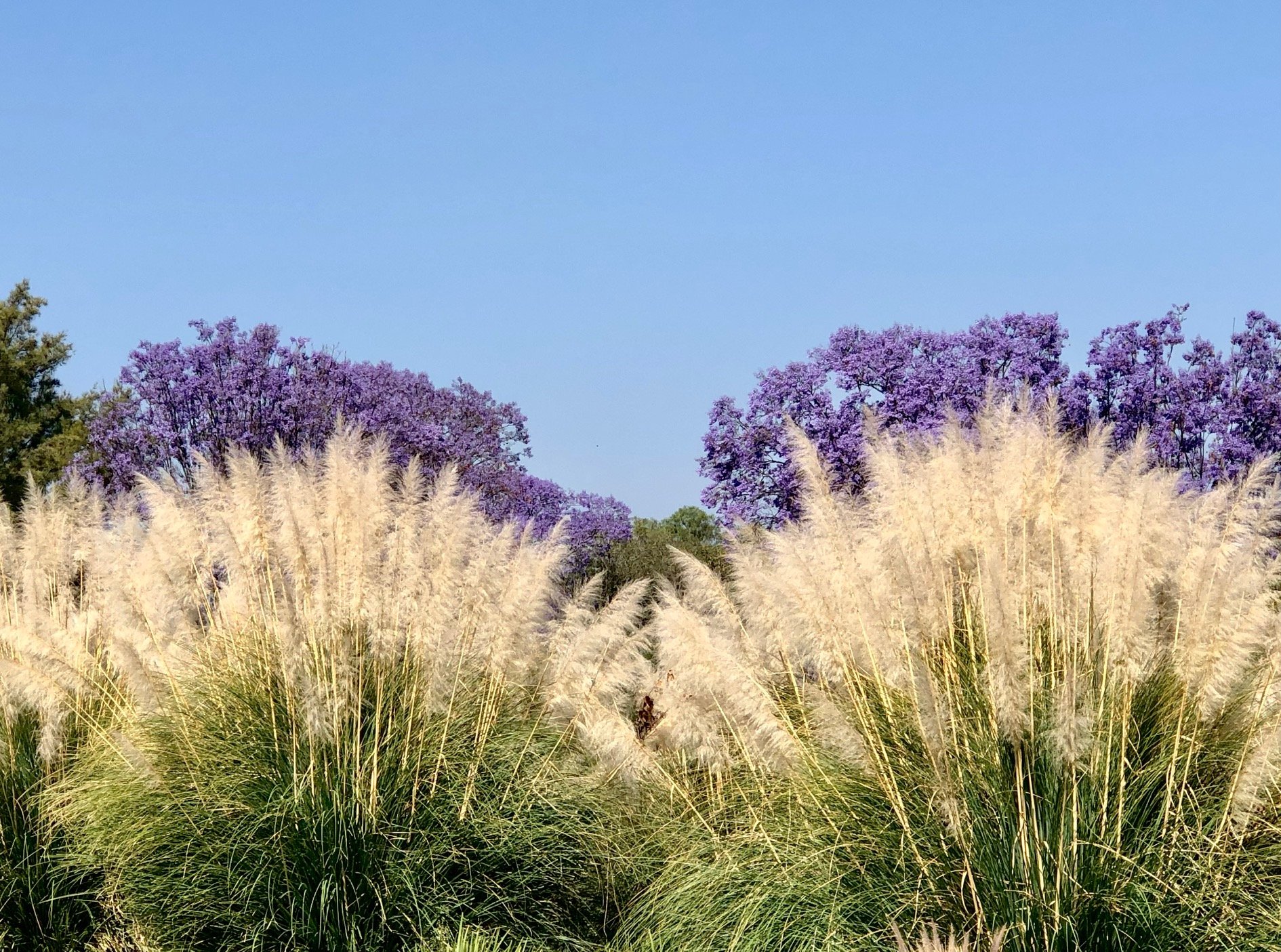

Extra pizazz with bougainvillea and Jacarandas
And, if there isn’t already enough purple, we can be greeted by white and purple paper flags flapping above streets.
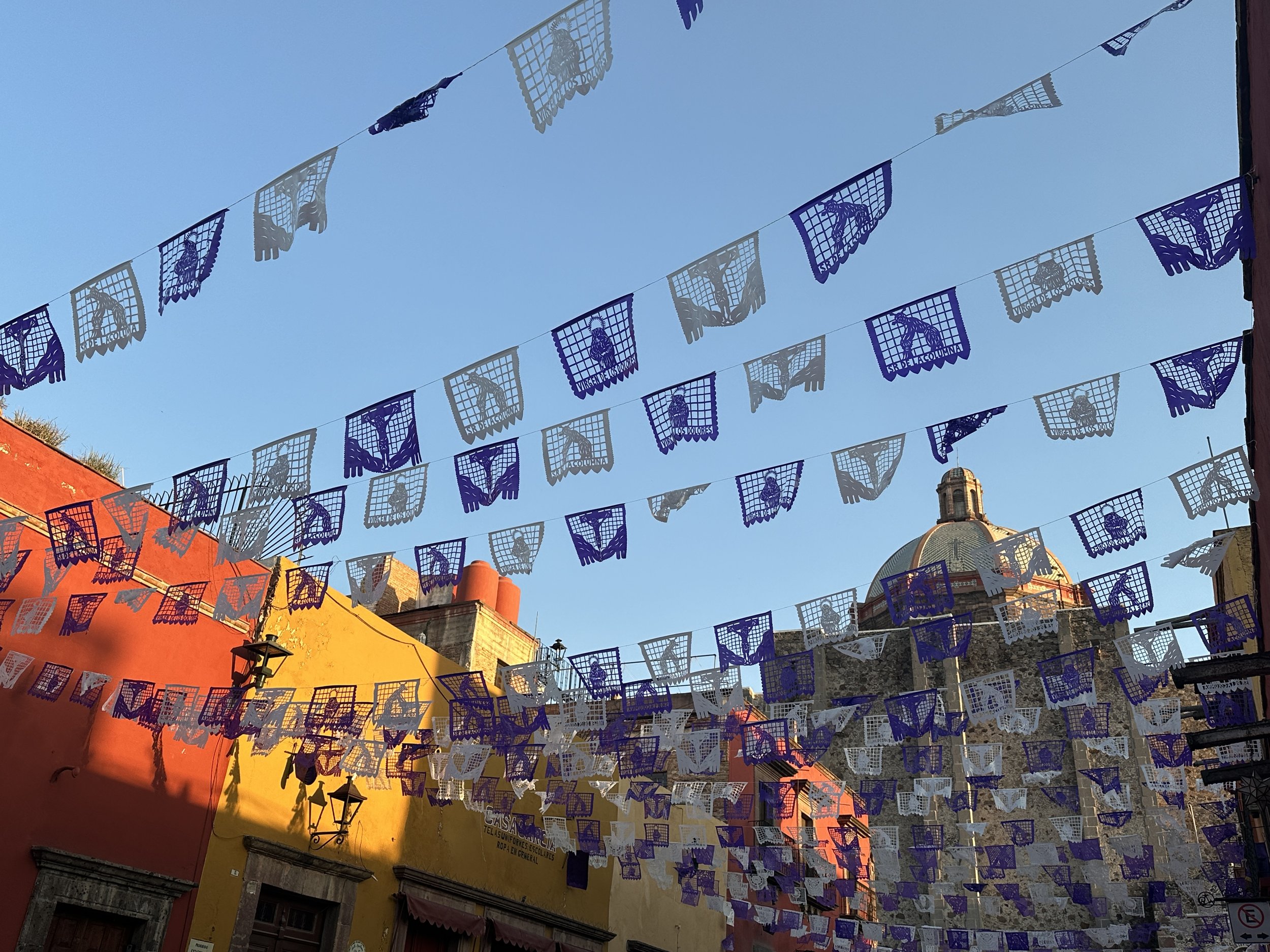
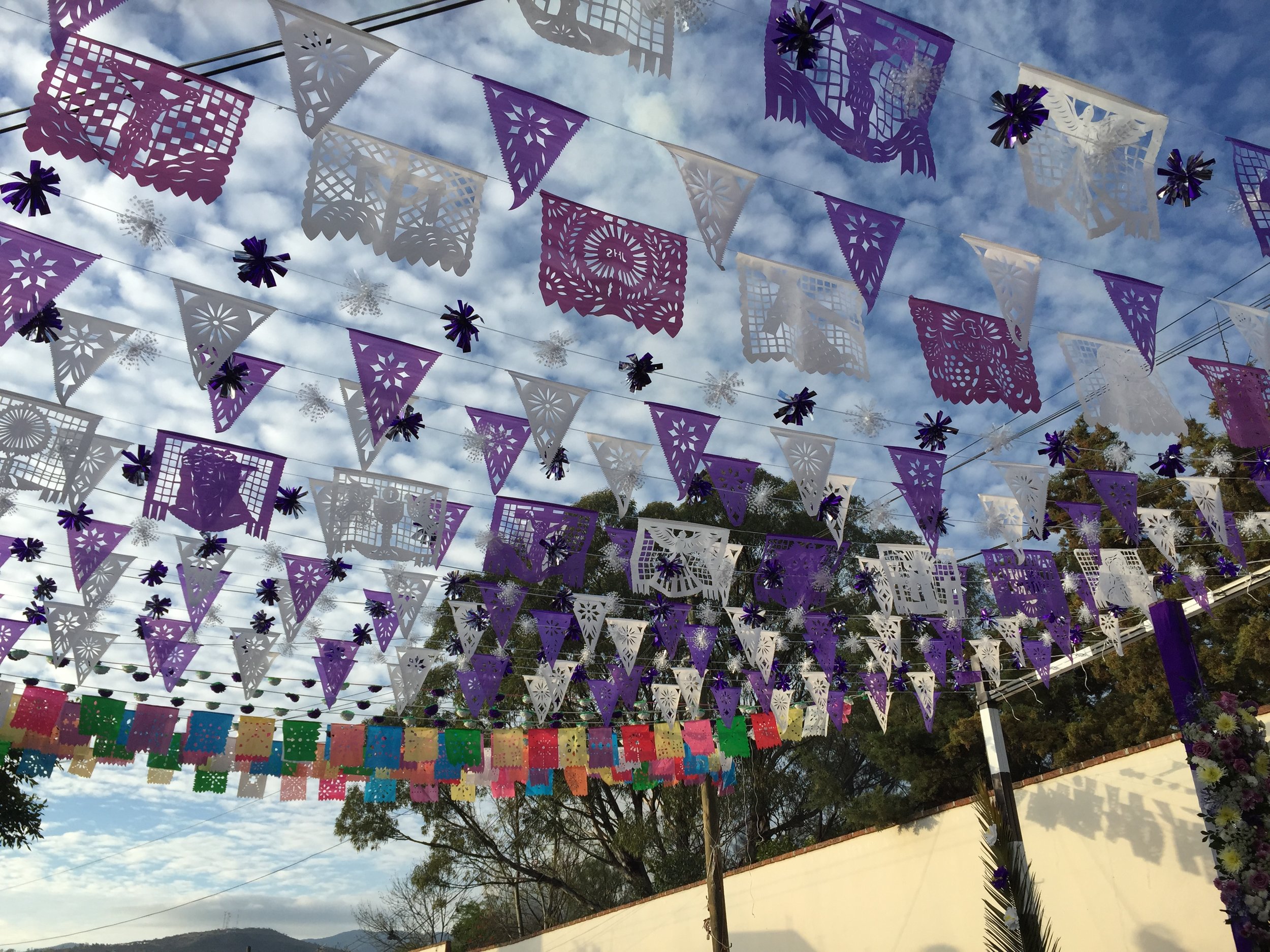
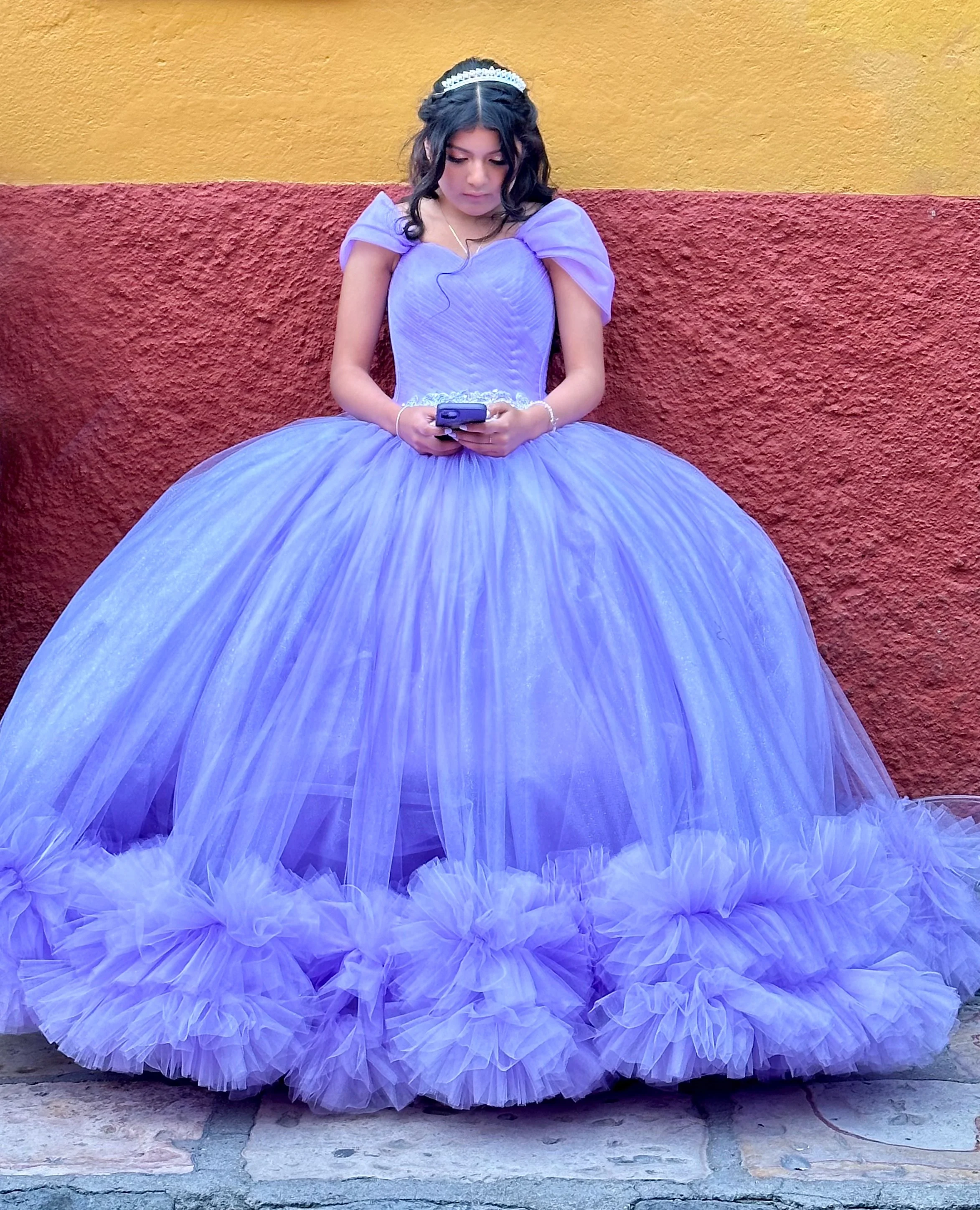
At any time of the year purple can be enjoyed as seen in the young woman’s Quinciniera dress. Personally, as I head north, I look forward to lilacs in my backyard, which, unlike non-scented jacarandas offer a distinctive, almost intoxicating perfume.
To read about Jacarandas in Mexico, City: https://www.nytimes.com/2023/03/25/world/americas/mexico-city-jacarandas.html?smid=nytcore-ios-share&referringSource=articleShare
To read more about the symbolism of red and blue:: https://www.honeysharp.com/journal/2018/12/9/red https://www.honeysharp.com/journal/2019/1/5/casa-azul-a-story-about-blue
