Festivals At All Ages!
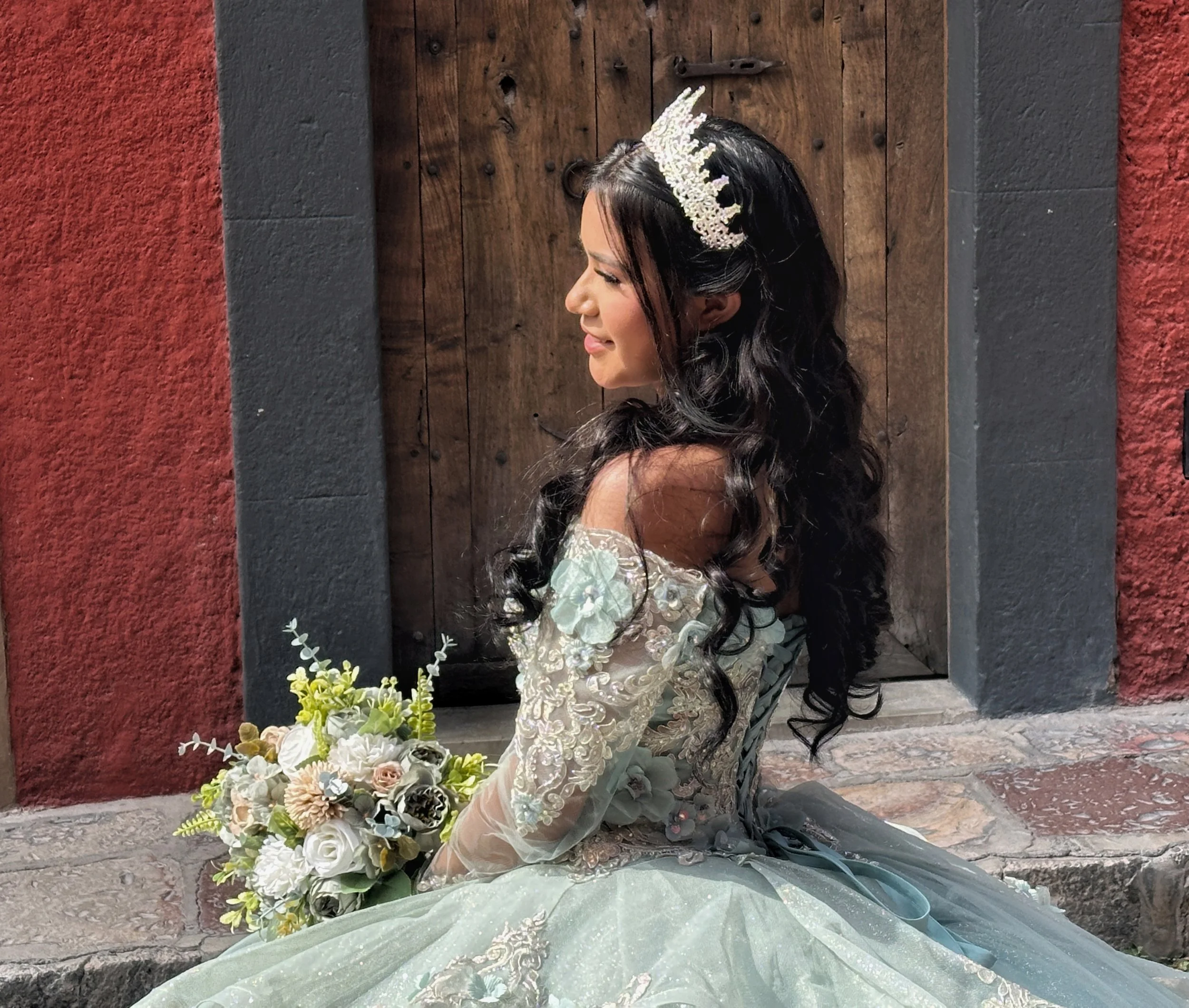
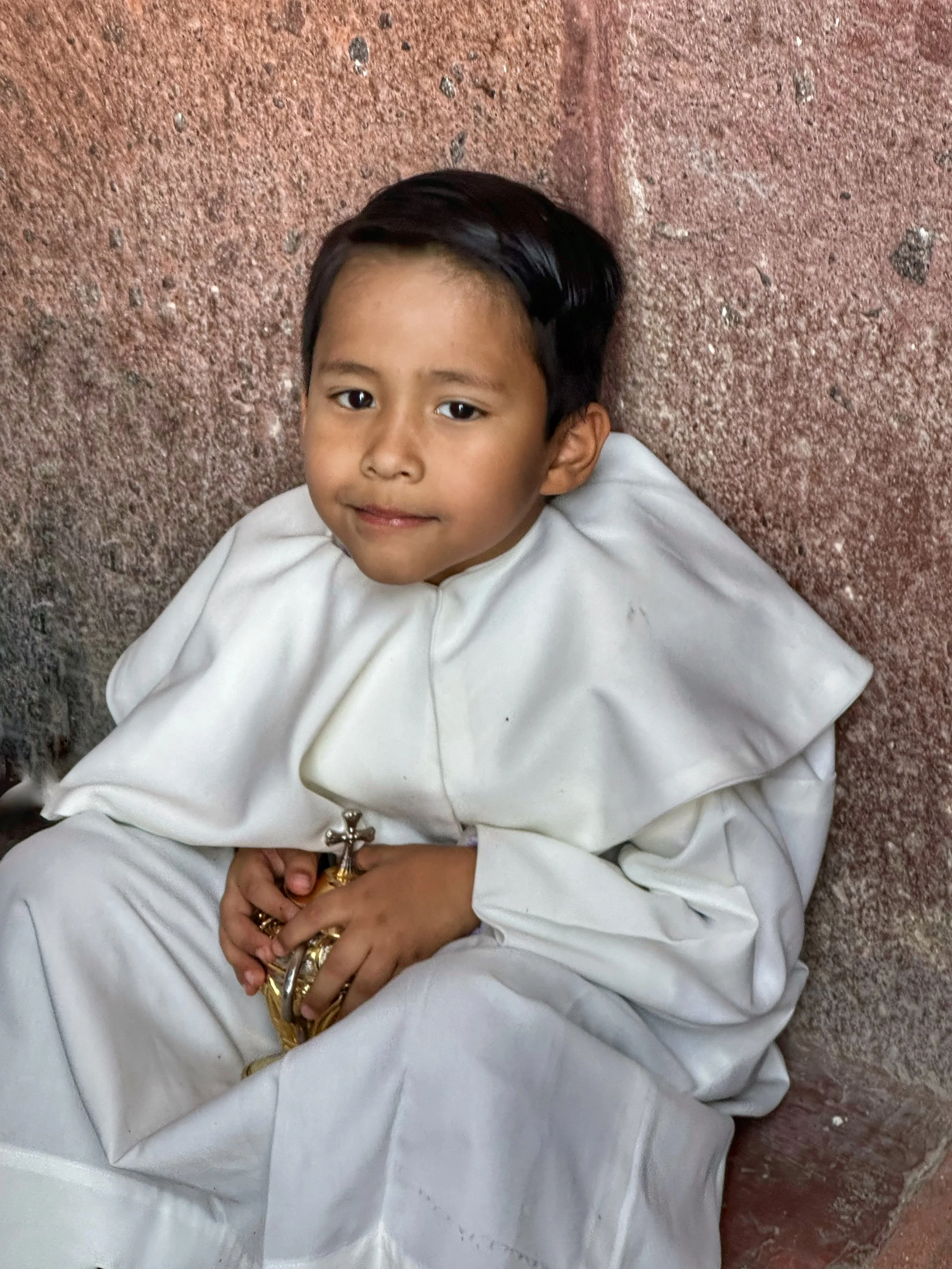
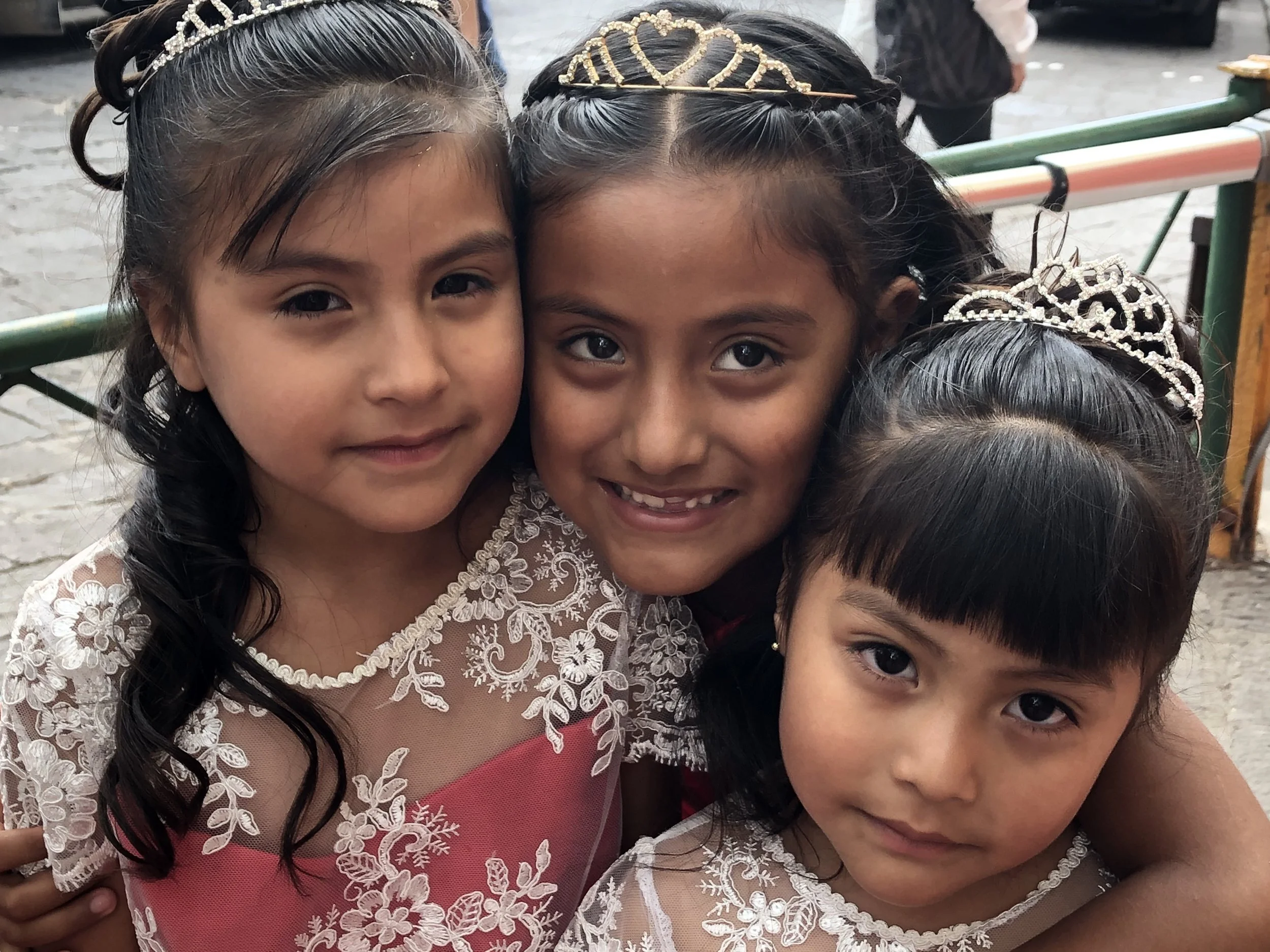
Having recently shared a piece on quinceañeras in Mexico, i.e. girls transitioning into adulthood, I’d like to share a few stories and photos of young folks celebrating festivals. With all the fanfare of this holiday season, religious festivals are upon us — particularly in Mexico. As my computer guy, Amadeus, recently told me: “We have LOTS of festivals!”
Here, in San Miguel de Allende, December 8th gave us the Day of the Virgin Mary and, less than a week later, the Day of the Virgin Guadelupe, a major celebration with the interweaving of the Aztec and Catholic cultures. Street processions, church bells, special delicacies, and, of course, the ubiquitous cohetes or fireworks that arouse one at all hours of the night, add a “punctuation mark” to one’s daily calendar.

Parroquia and Huge Christmas tree
Even after 15 years as an ex-pat in Mexico, I remain impressed by how extensive such celebrations, culminating as well as pilgrimages by foot or horse from the campo, remain. Christmas continues through January 6th, or Three Kings Day, while the Day of the Dead stretches on for three days. Young and old participate in such cyclical times of the year, marked by seasonal and symbolic flowers such as Marigolds, Poinsettias and Easter lilies.
Currently, for nine days (symbolizing Mary’s pregnancy), many open their homes in the evening for posadas or lodgings. As a re-enactment of Mary and Joseph’s search for shelter, they involve door to door visits all with music, warm ponche, a fruit drink, and, if you’re lucky, yummy tamales. Such traditions run counter to Western commercialization as in these more recently adopted kitschy decorations or Santa Claus hats.
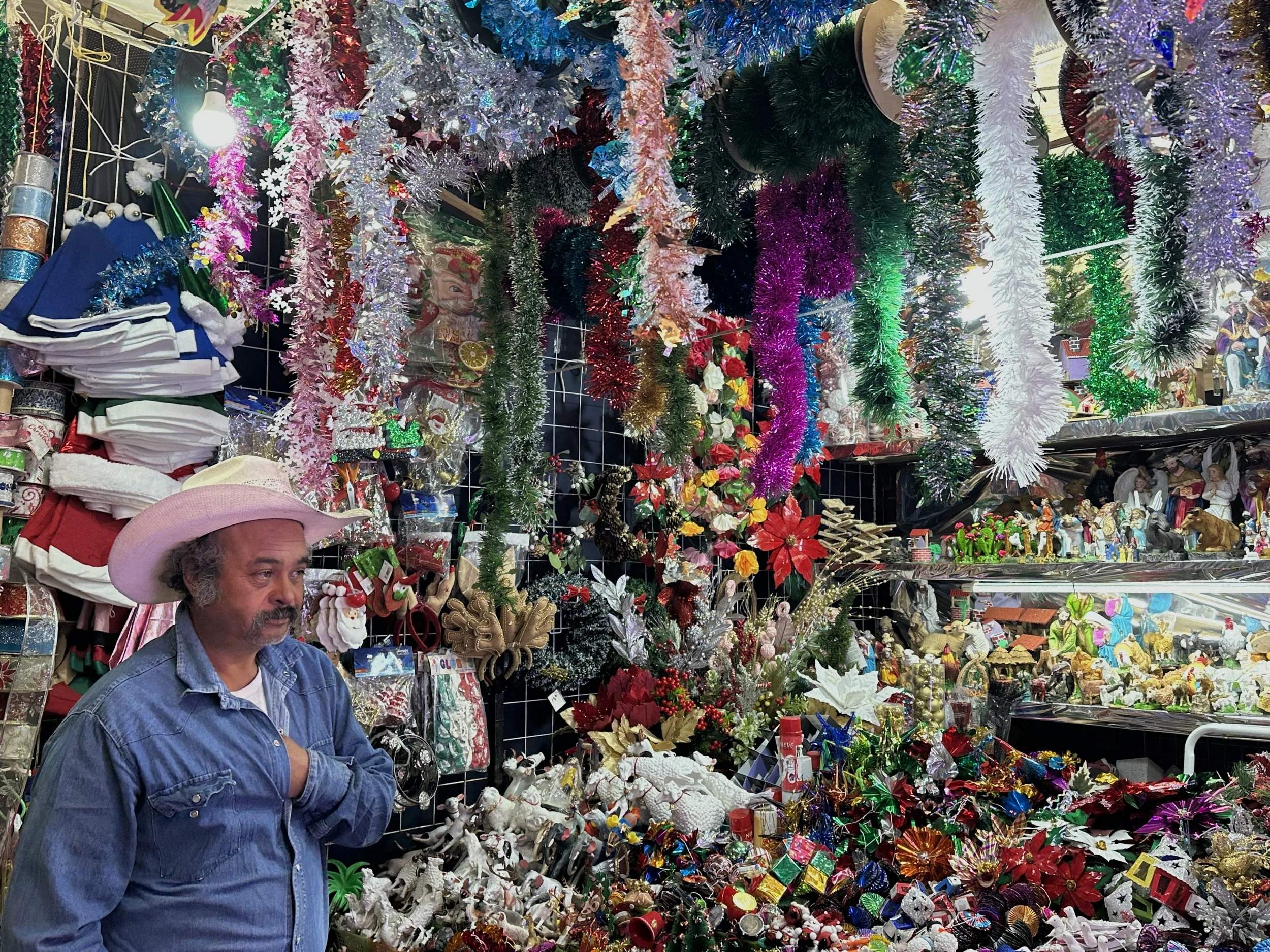
Selling Xmas decoations in the market
And yet, and yet - just last night, returning from dinner with friends, we discovered our street blocked by a white car with kids each taking a turn hitting a piñata hanging above. Symbolic of this season it comes in a seven pointed star-shape, each of which I was told represents a sin. Many, in various, bright colors, can be seen alongside glowing “silver” stars strung above streets. While spell-bound on our small street, David and I were offered a cup of warm ponche by a neighbor. Soon candies were splayed all over the cobblestones.
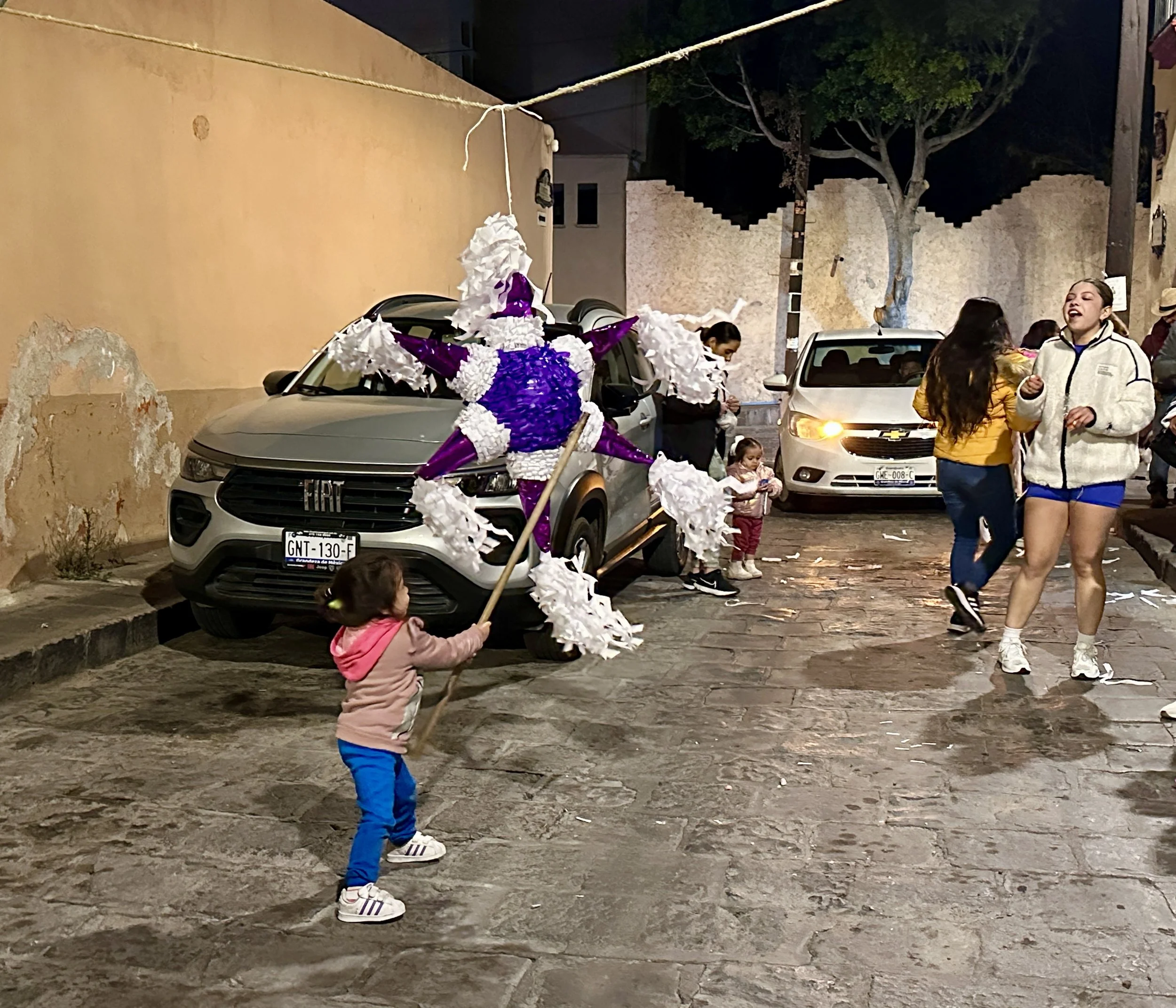
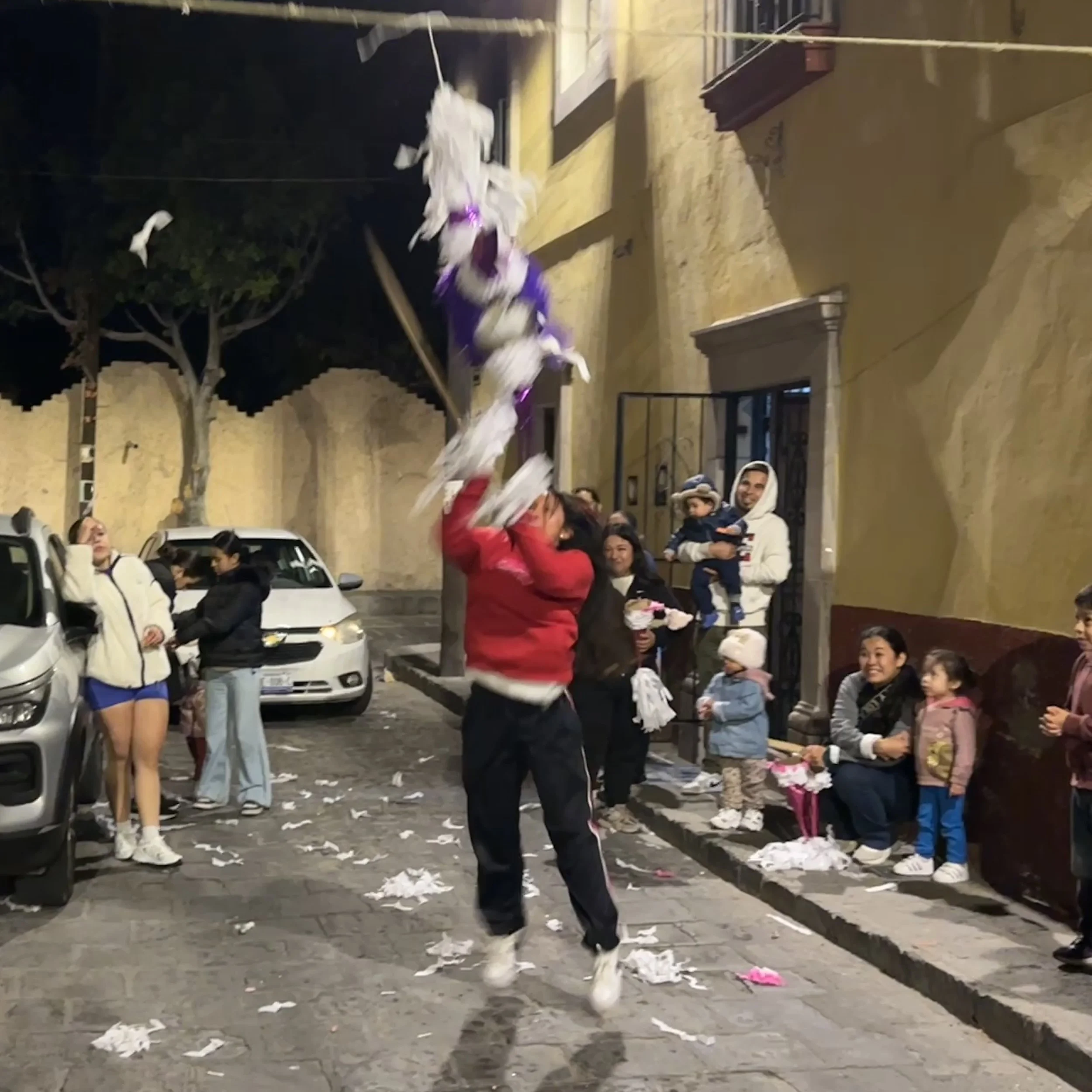
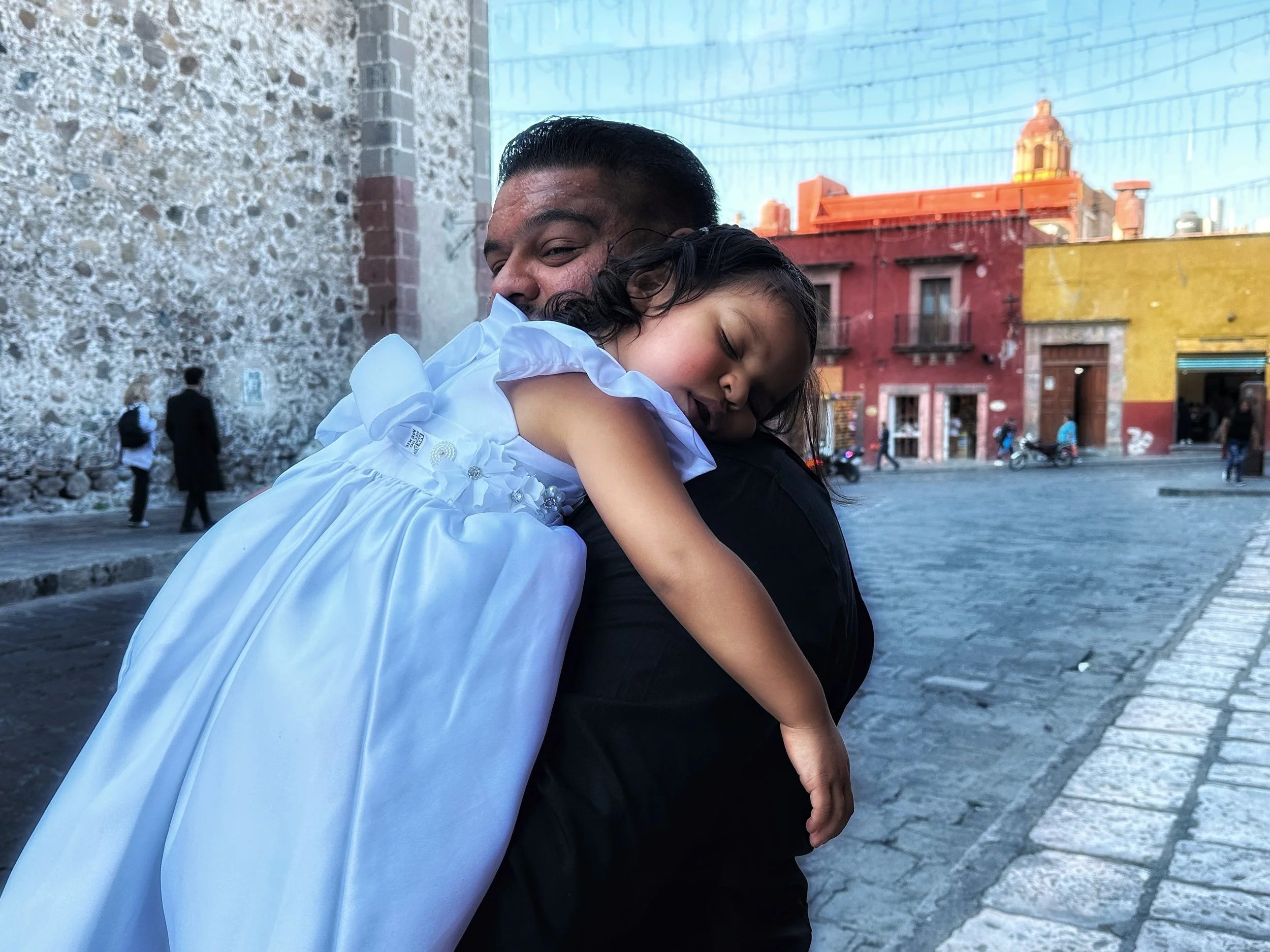
With deep-seated customs involving the extended family, neighbors, teachers, the clergy — the whole town actually — children can actively participate and thrive in a closely-knit community.
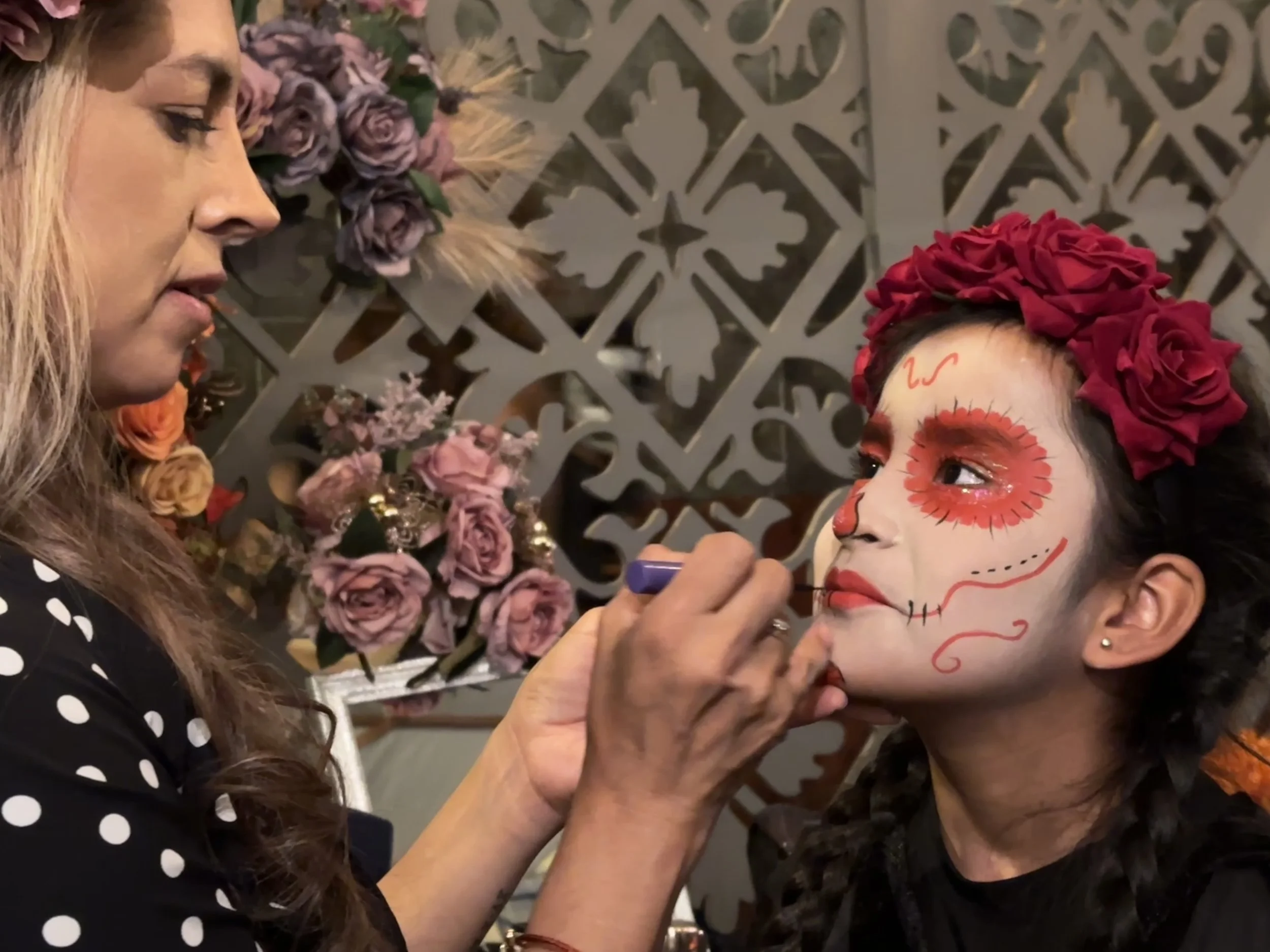
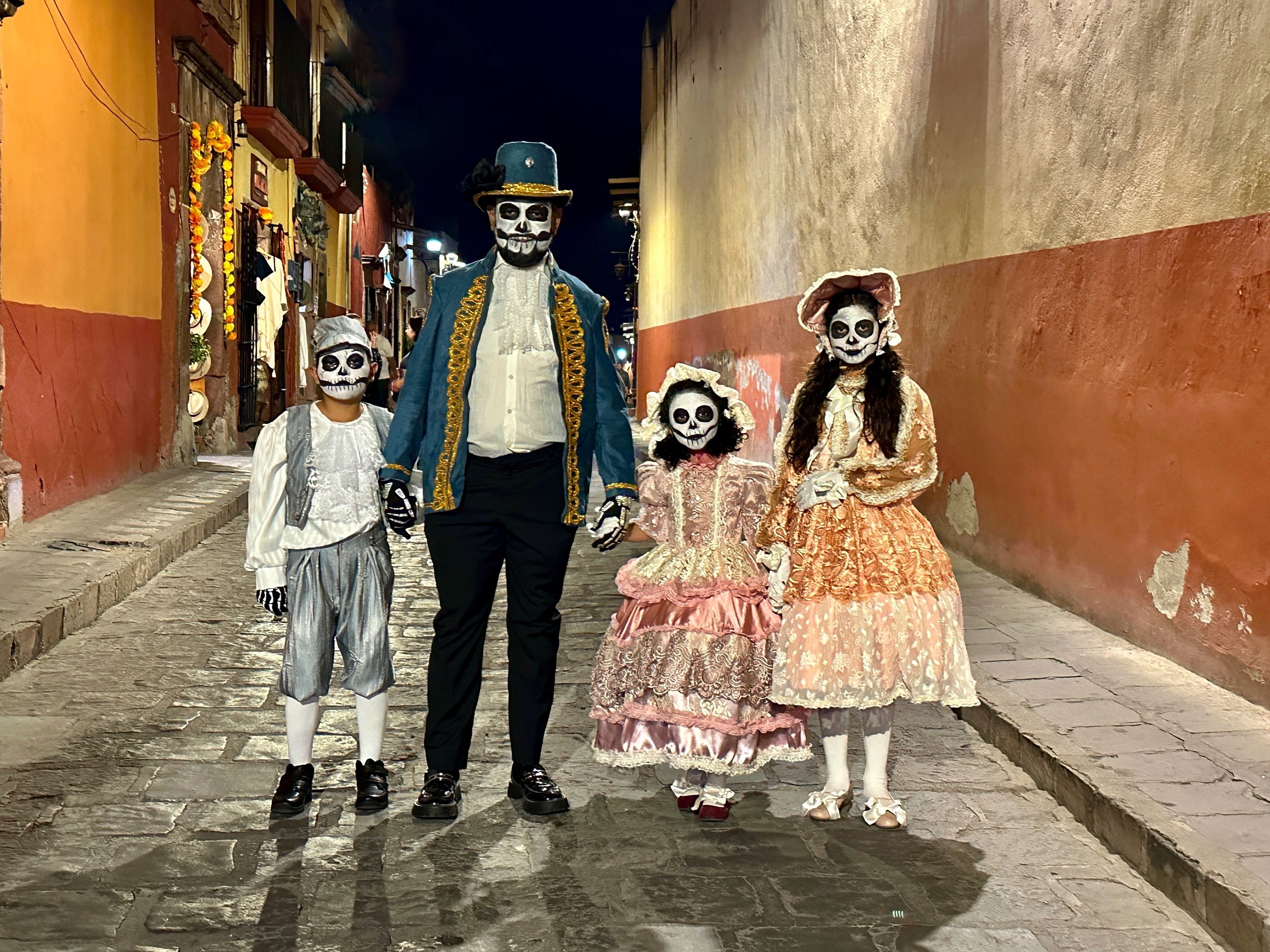
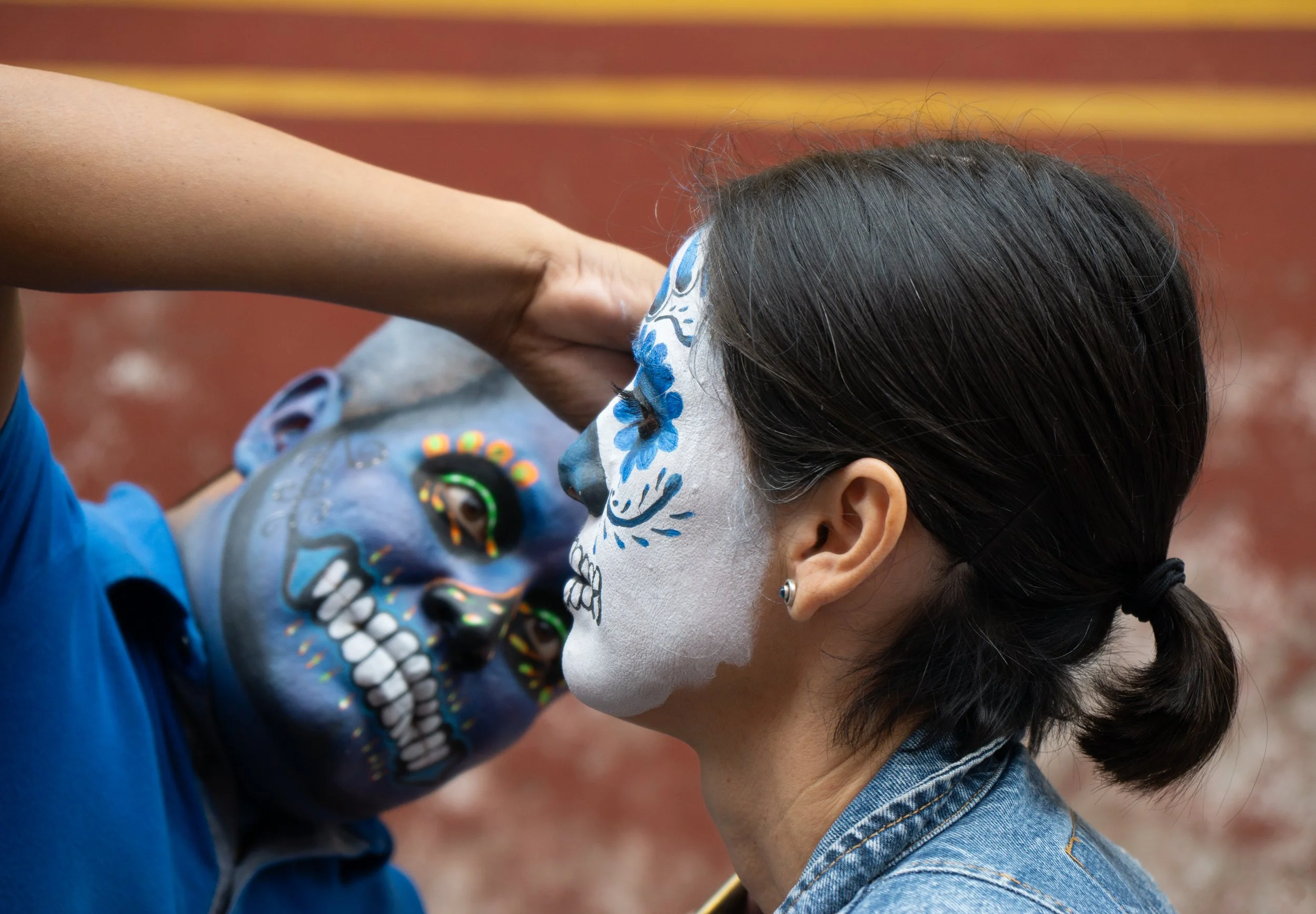
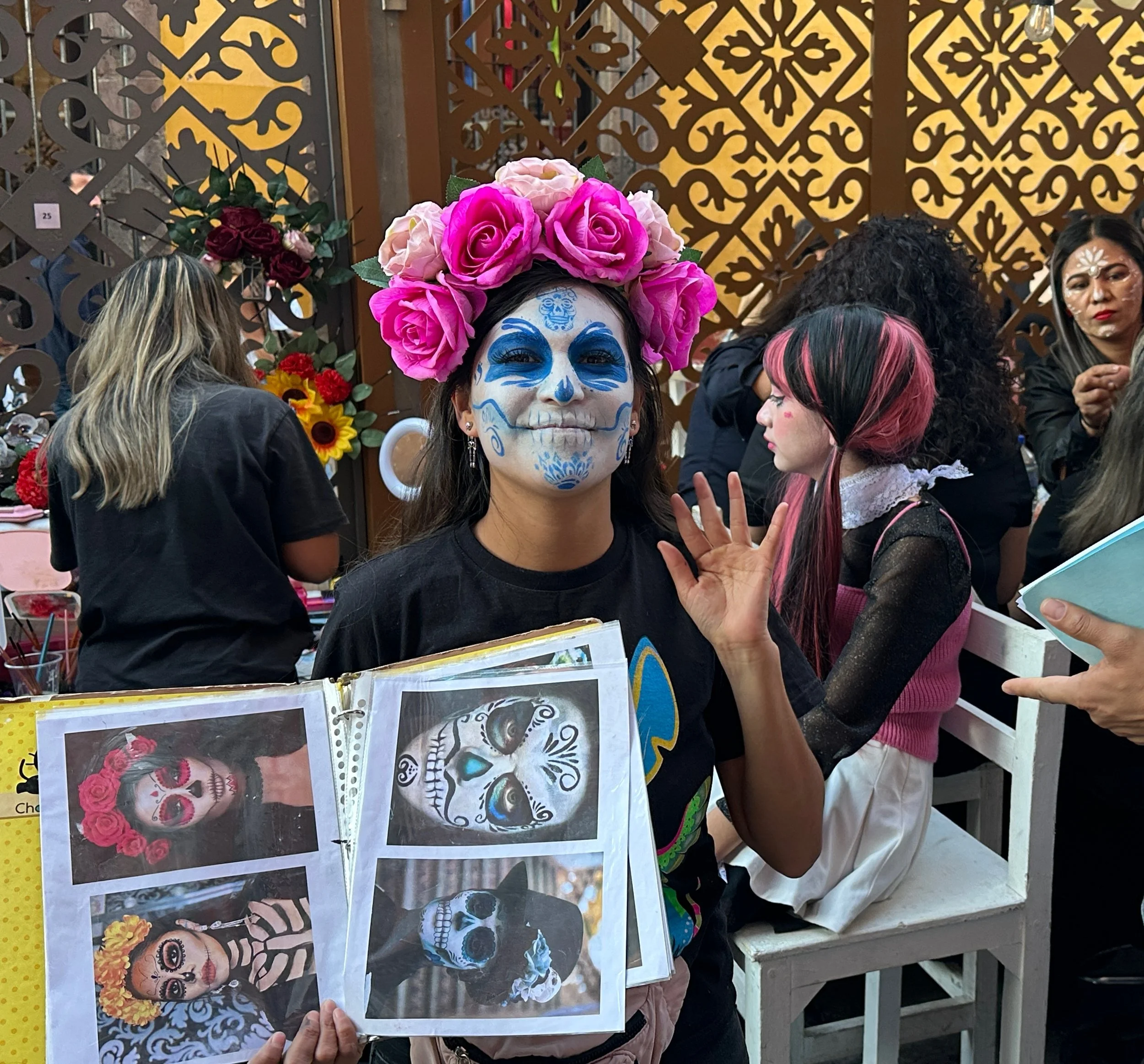
Of course, as is the case throughout the world, the ubiquitous presence of cell phones can’t be ignored. Still, partaking in traditions such as the piñata as well as donning costumes, masks, face painting, elaborate crowns and other adornments, are all about us. A bonus for kids. How could I not remember sneaking into my mother’s closet to don a dress and high heels? But this was not a group activity and certainly not on the street.
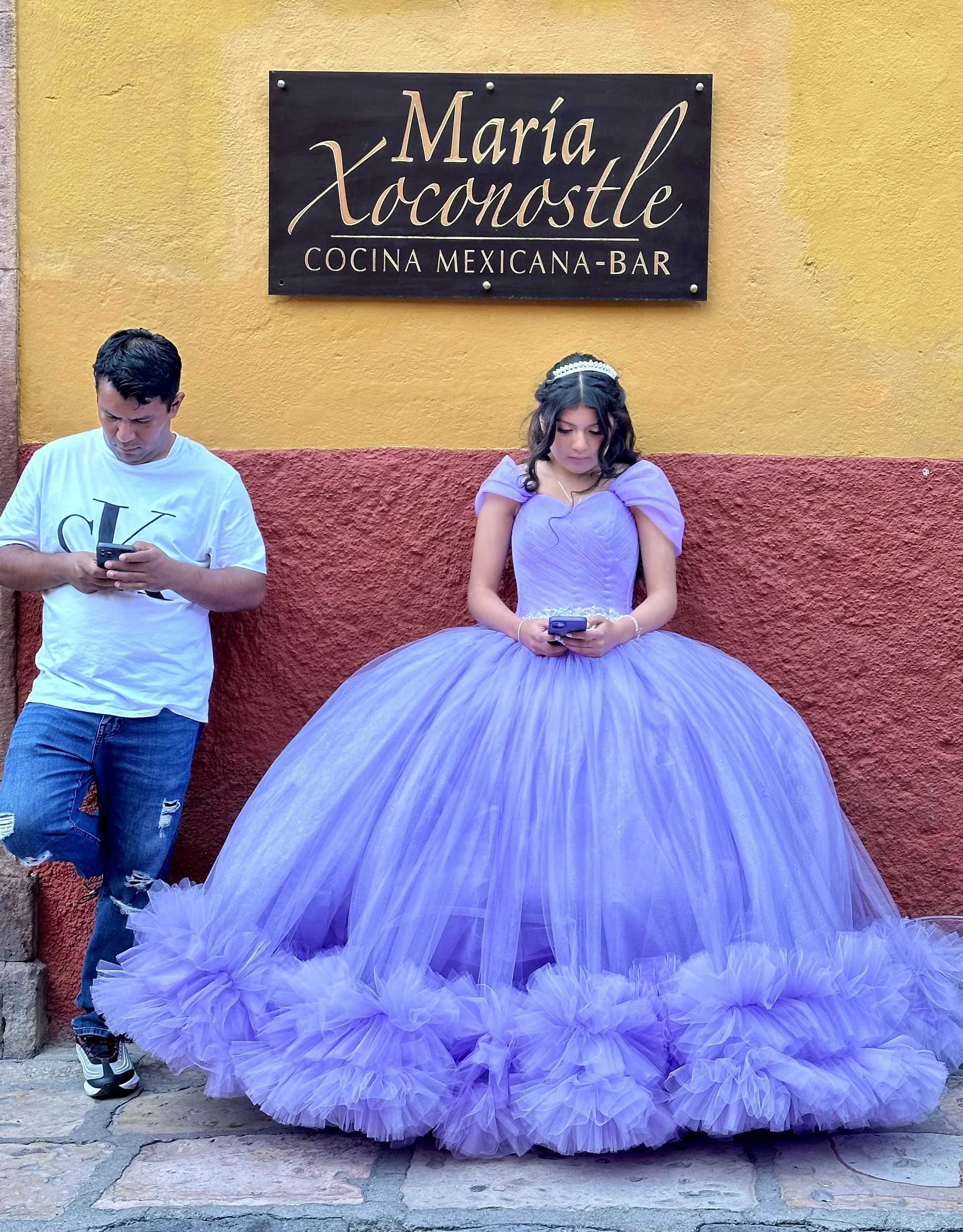
And so, as a little end of year gift, I’d like to take you back with a few visuals from the recent Dia de los Muertos or Day of the Dead onto the El Dia del Señor de la Conquista with its elaborate Azteca dances, and finally to Pasqua or Easter.
Just below are images from El Dia del Señor de la Conquista, (The Day of Lord of the Conquest), a major early March festival specific to San Miguel de Allende. Azteca dancers in elaborate costumes involving towering feathered headdresses, beaded garments, and ankle rattles are paying homage to the arrival of the Spanish and Christianity in the late 1580’s. At the Jardin or the main plaza, in front of the Parroquia, the parish church, we are bathed in a riot of color, copal incense, drumming and chanting. Paradoxes abound in this celebration that welcomed the conquistadores after so much fierce resistance by the Chichimeca in the surrounding hills.
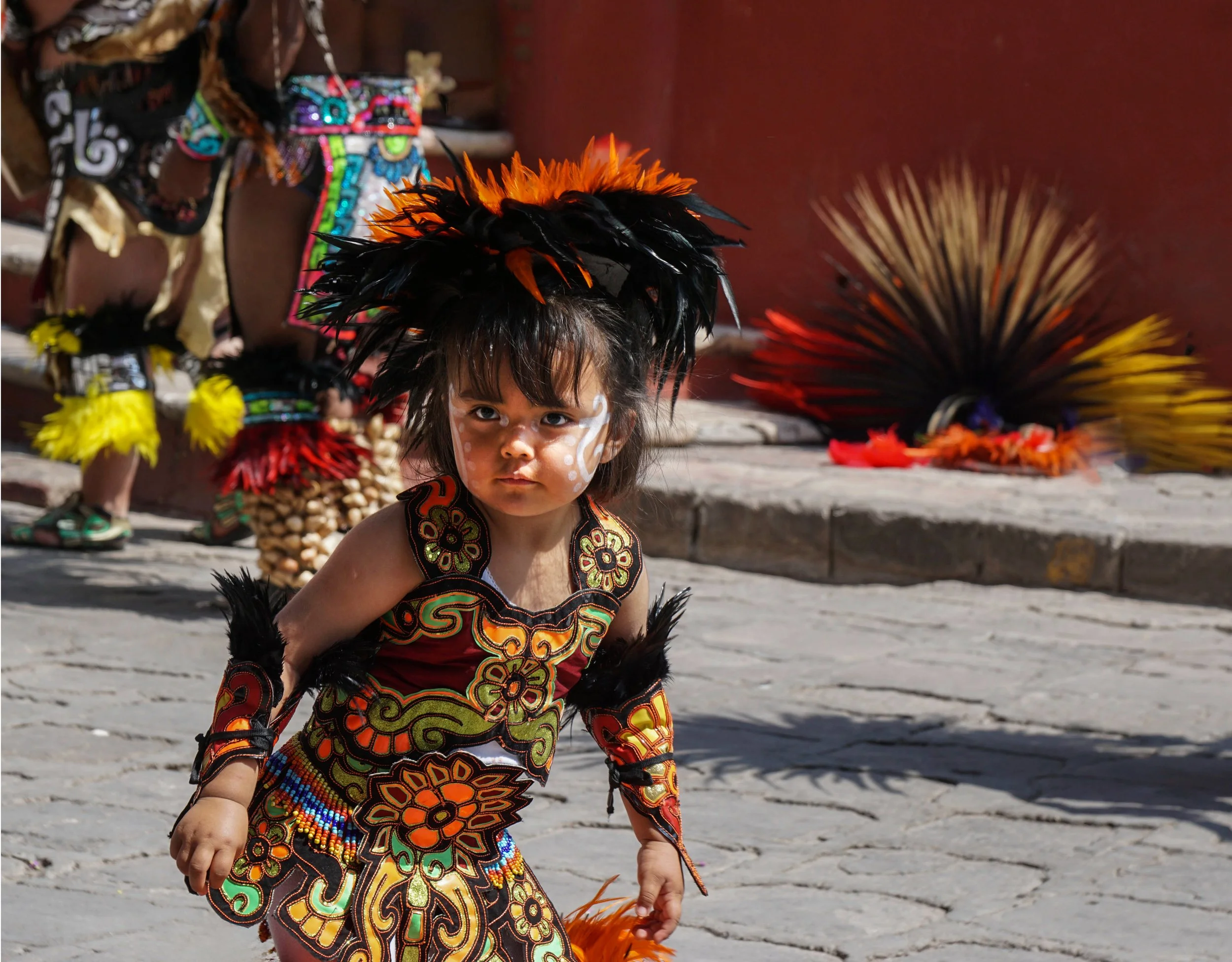
Azteca dancing girl
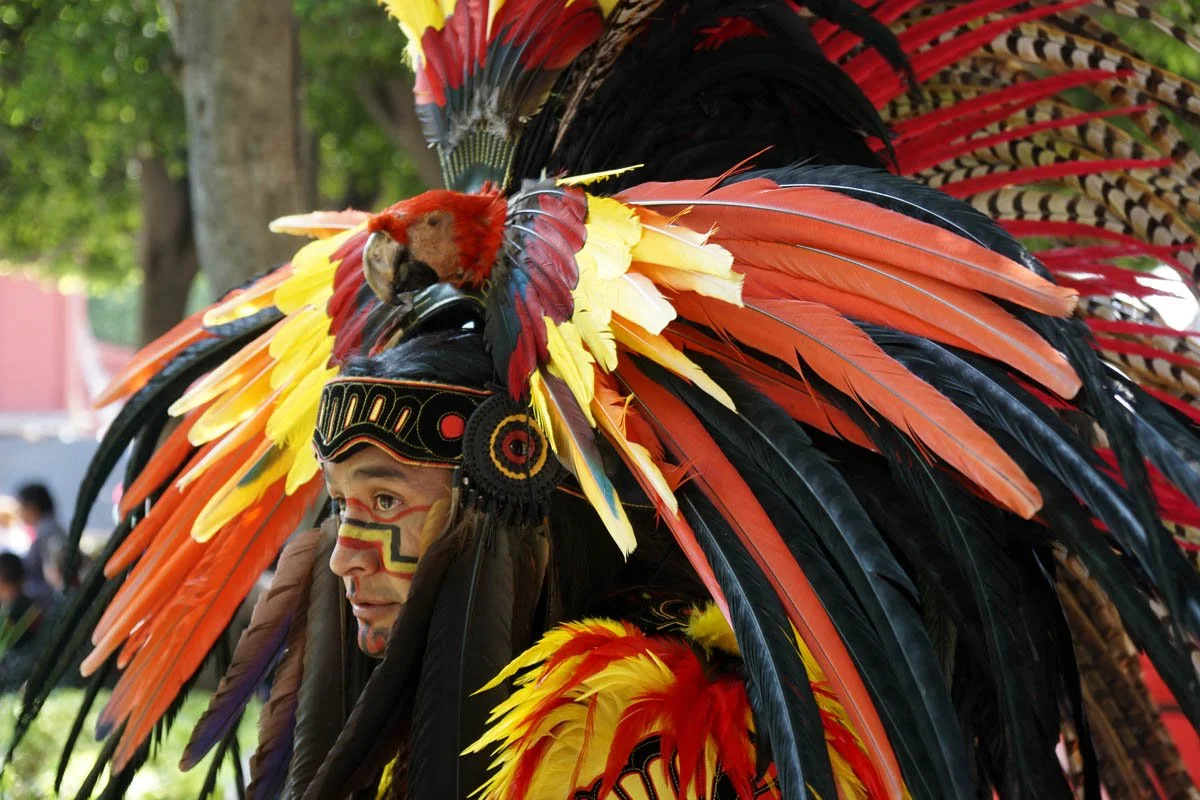
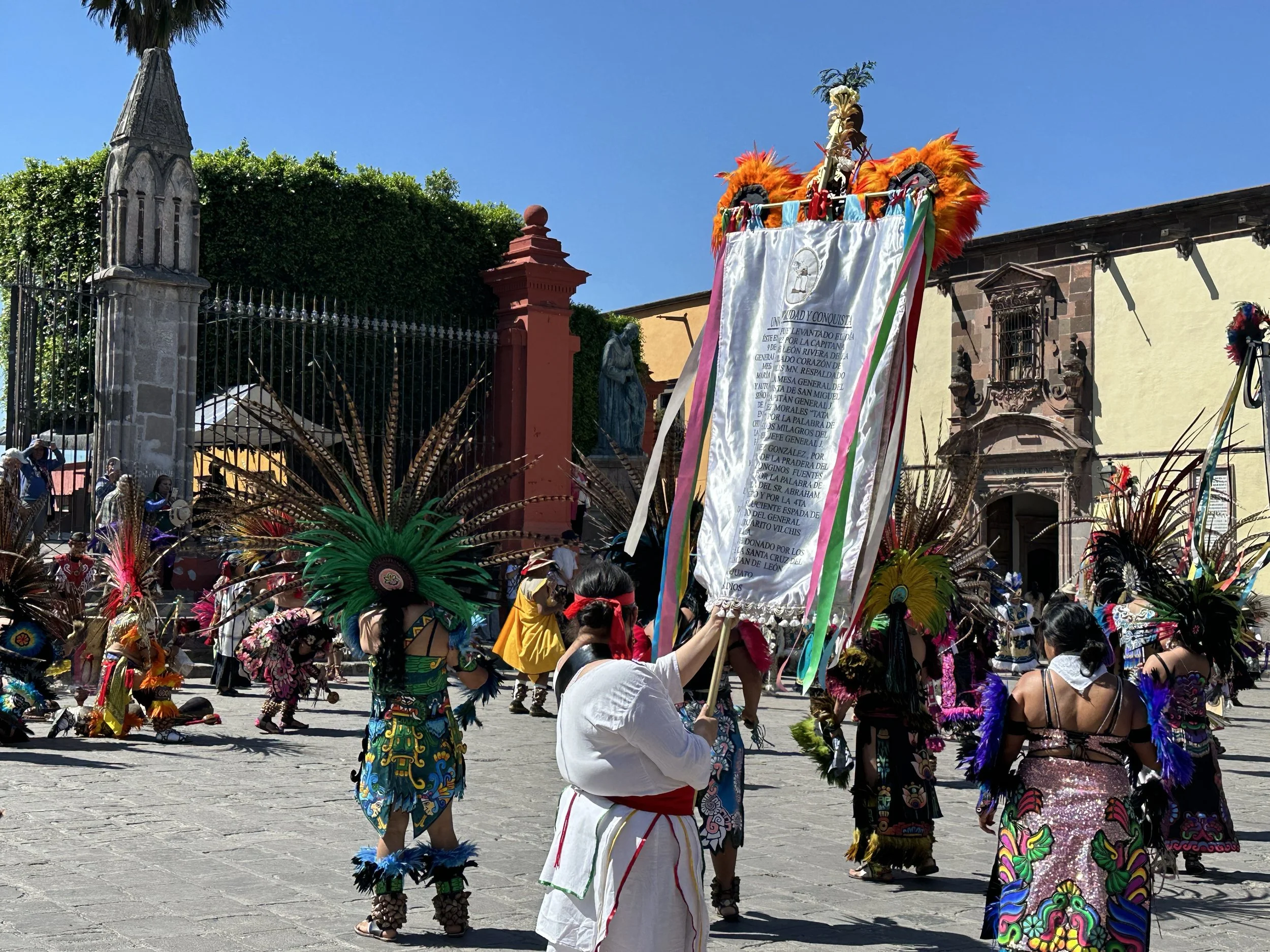
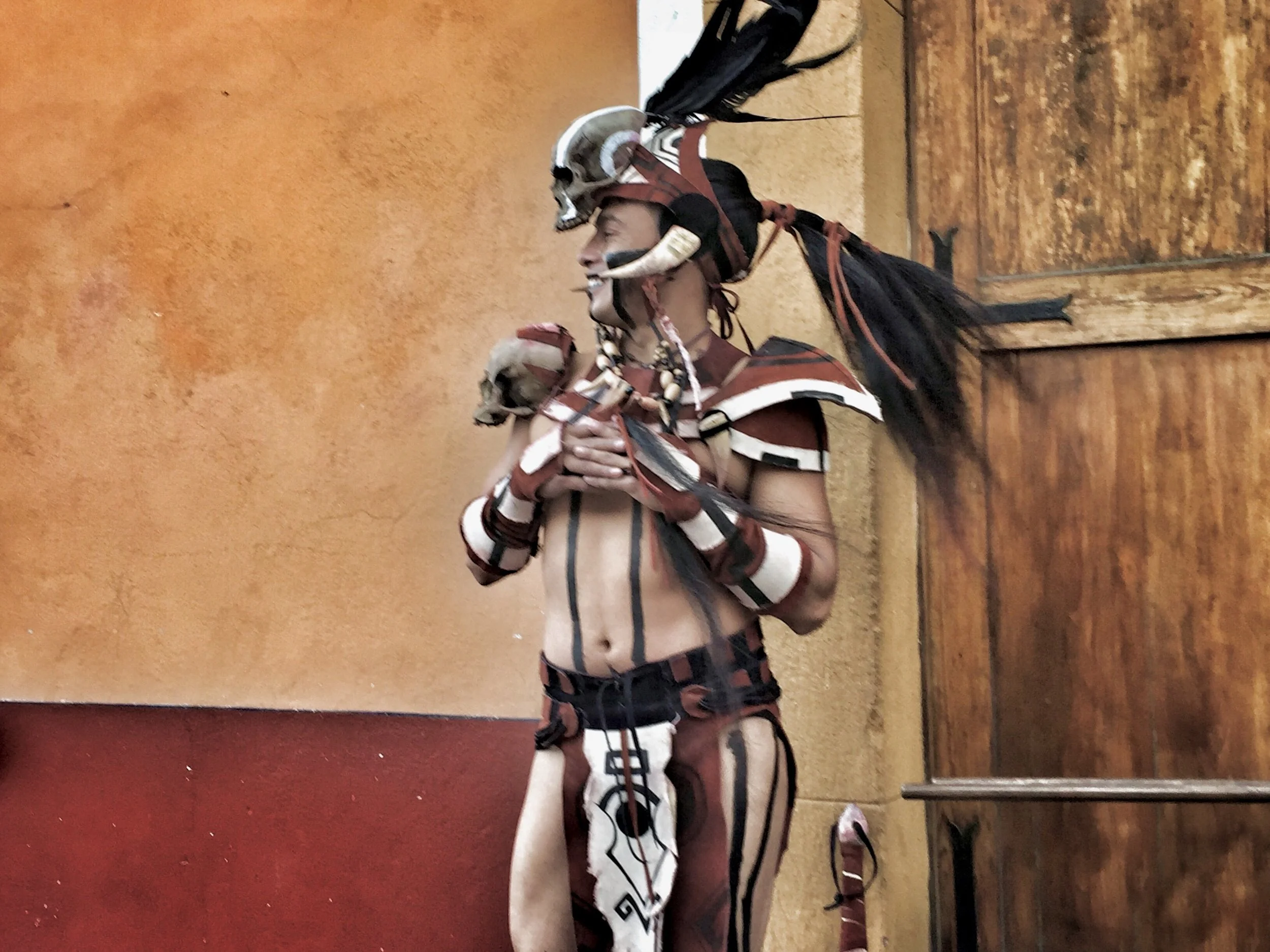
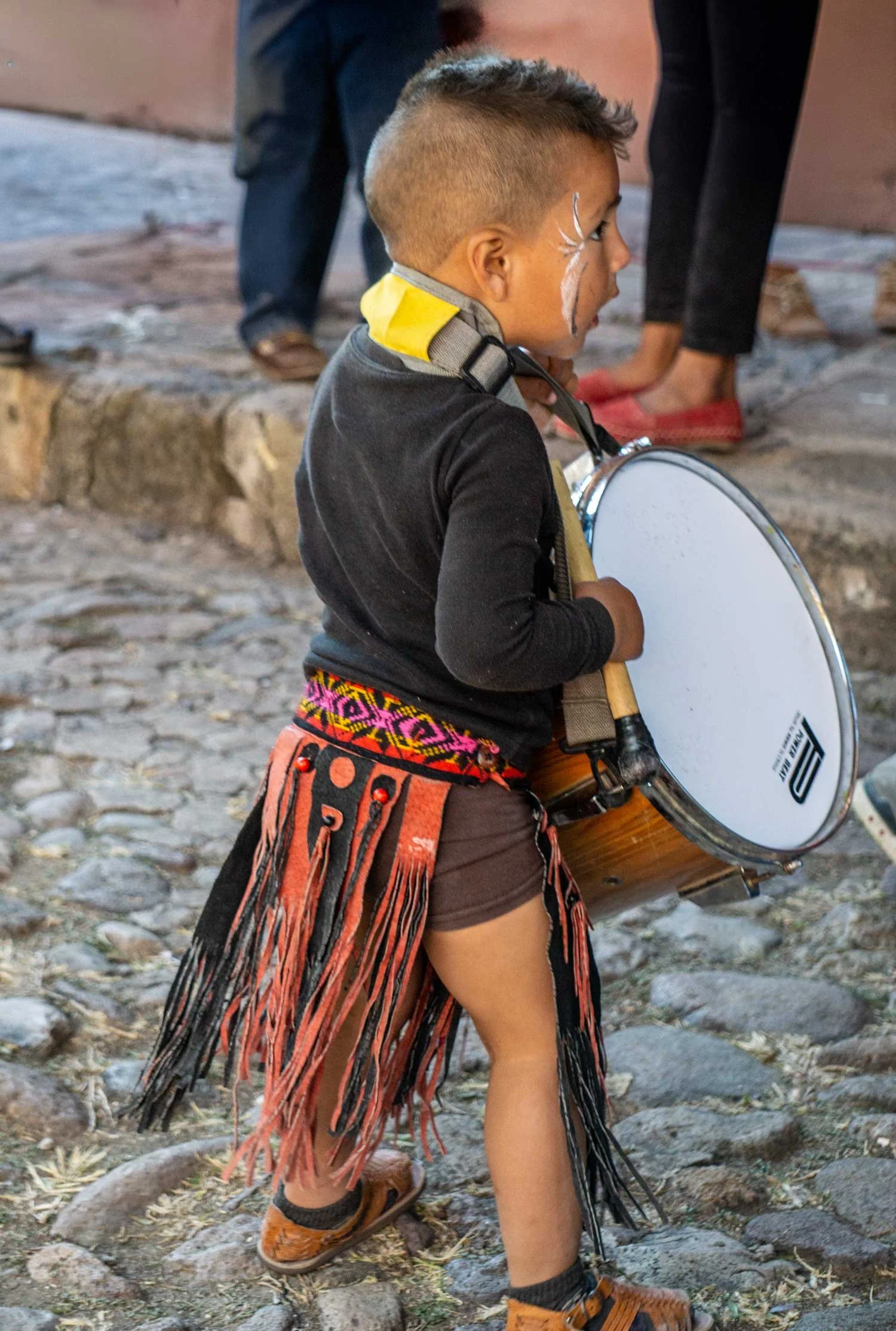
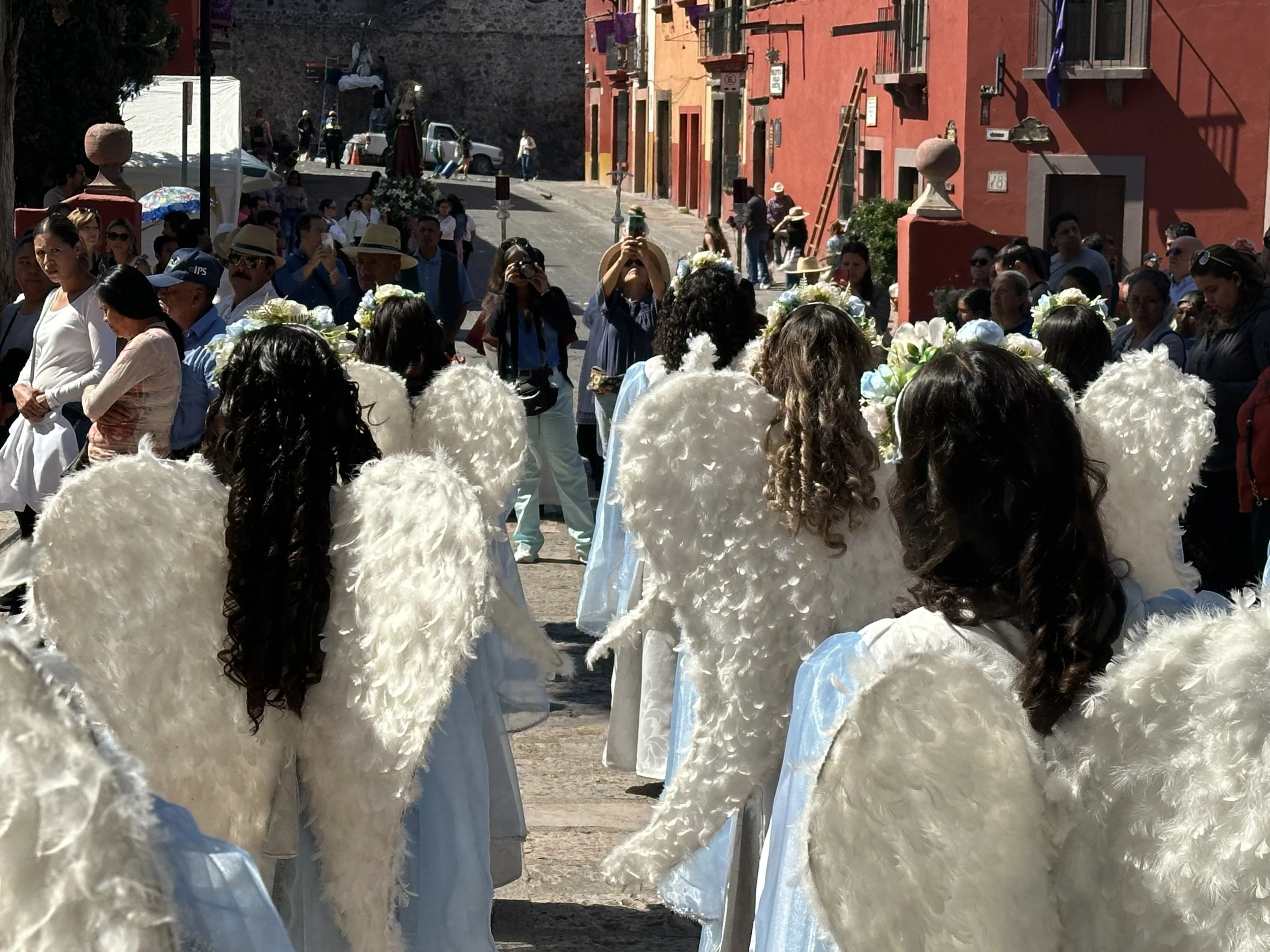
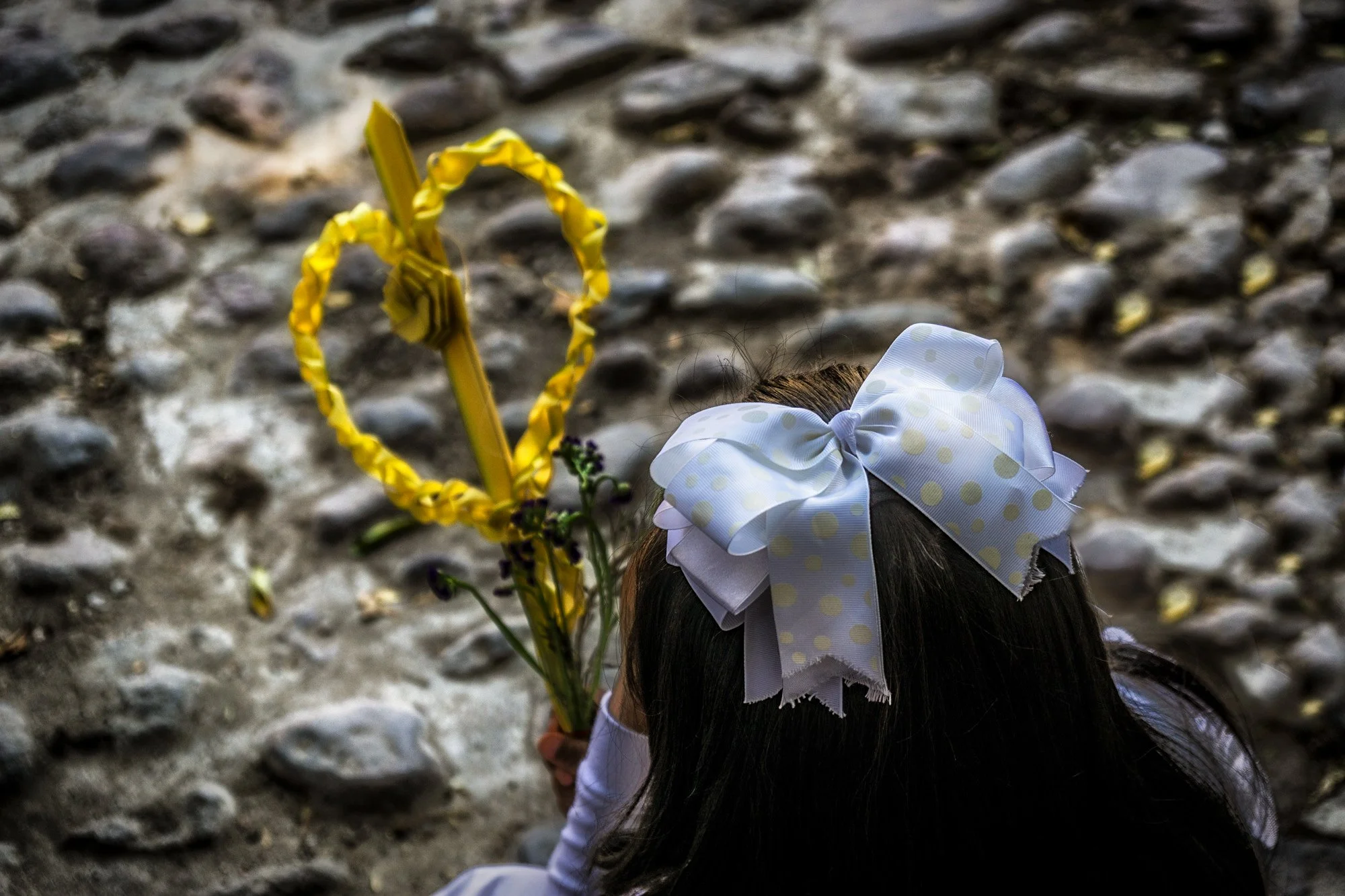
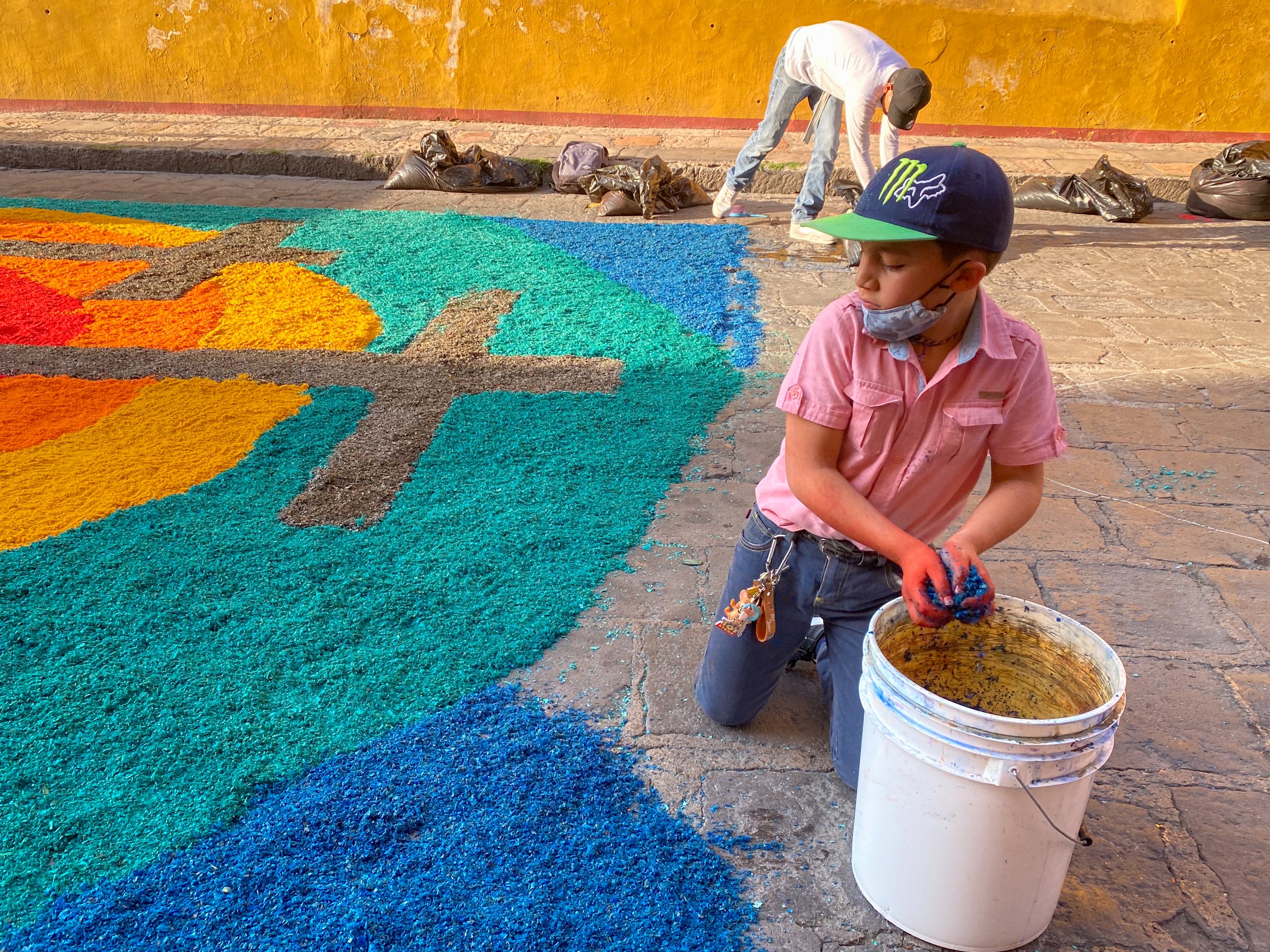
After such intese performances, rooted in ancient traditions that blend, even synthesize pre-Hispanic and Western cultures, we can look forward to other enactments that continue from Palm Sunday to Easter. Angels, Roman gladiators, Pontius Pilot, Jesus, Mary Magdalen, etc. abound in such theatrical displays that include the decorating of streets with Biblical images.