
The Color Purple

One of many jacarandas in the historic centro of san miguel
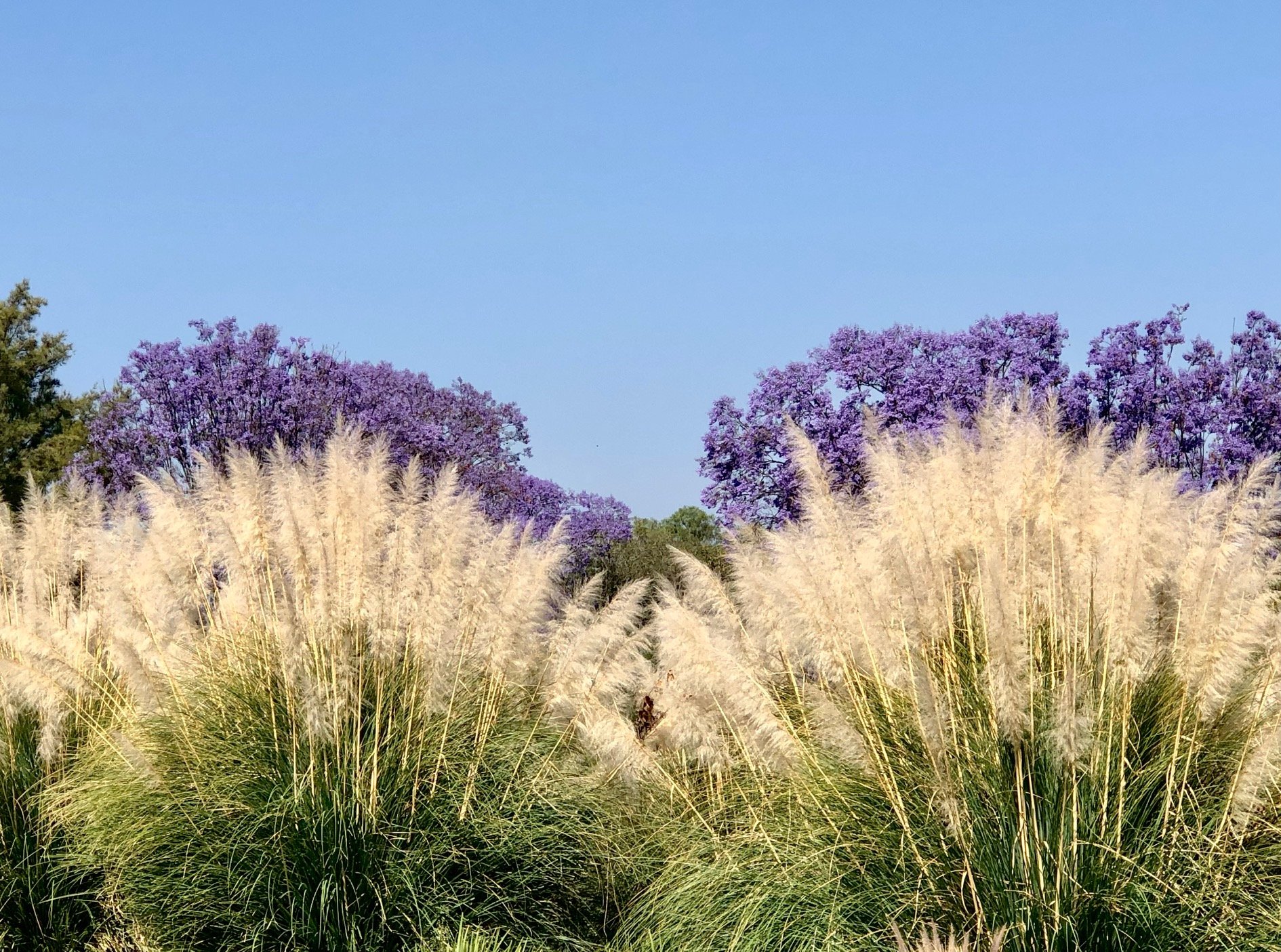
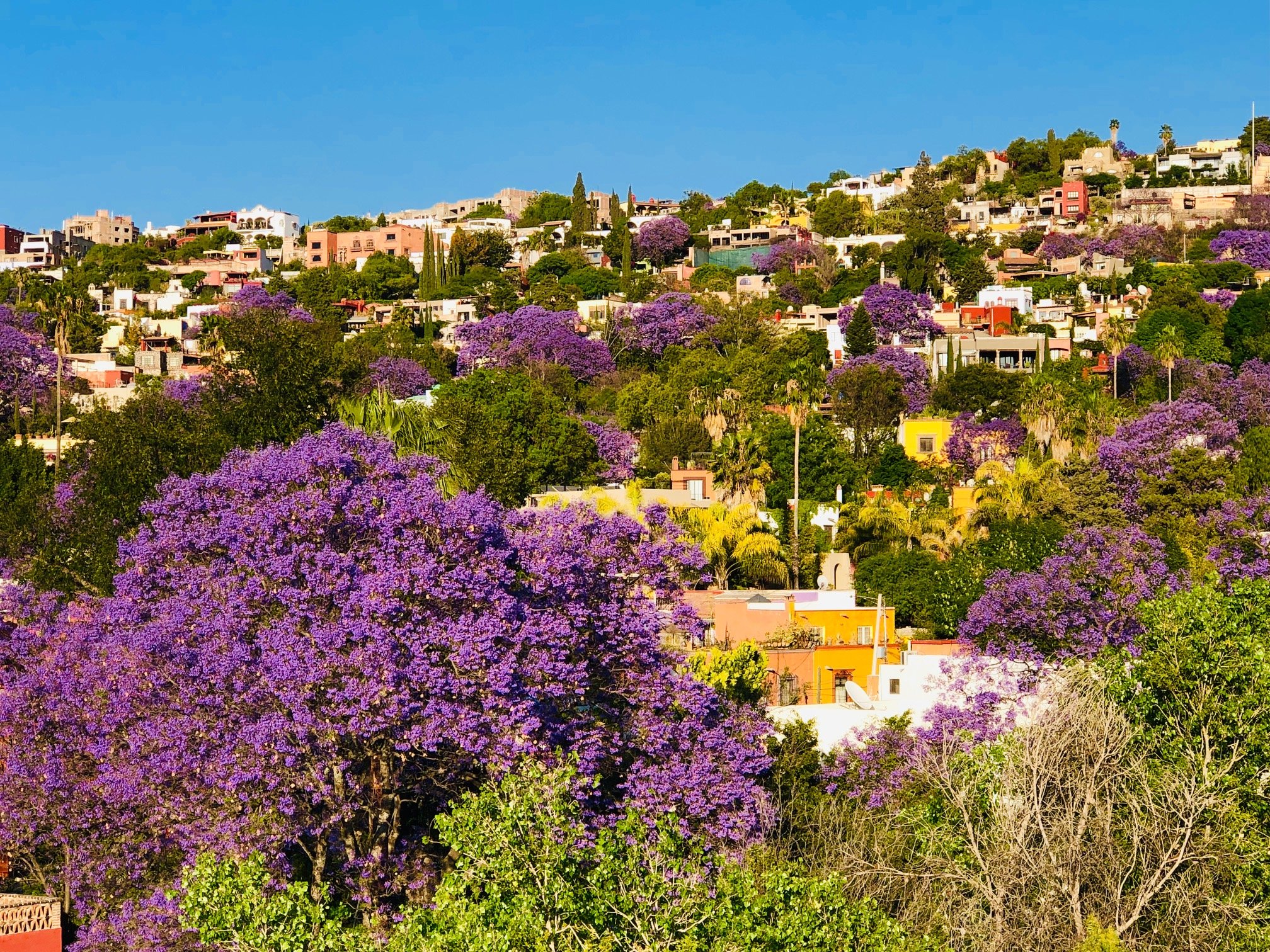
As we greet April in San Miguel de Allende, Mexico, we can still revel in the blooming, lavender-colored jacarandas. Like the cherry blossom trees in Washington, DC, they grace the streets and gardens here. Their timing is almost uncanny. Jacarandas’ extravagant lavender-colored displays coincide with Semana Santa aka Easter, where the color purple embellishes religious icons such as the Virgin wrapped in a velvet purple cloak.
Like the forty days of Lent before Easter, anticipation makes for an even greater appreciation of the Jacaranda mimosifolia, whose fluoresence timing precedes leafing out, brings a sense of rebirth. Witnessing their blossoms adds to the magic of spring and the Equinox. Sadly though, their delicate petals quickly succumb to gusts of wind — a common phenomenon here with daily transitions of warm days and cool nights. Sidewalks, streets, car windshields, one’s hair, you name it, become “decorated.” (So is one’s nose if susceptible to allergies.) A tbeautiful image is that of what the author, Alberto Ruy Sanchez, once wrote: “when the jacaranda flowers fall, the sky blooms on the ground.”

Credit: David Lippman
In their season there might seem to be a certain synchronicity with a cultural calendar: Semana Santa when the color purple, laden with symbolism, is revered. Below, is a street carpeted with tiny shreds of dyed sawdust, yellow chamomile flowers, candles and oranges. Cloaked in a deep purple velvet robe is the bereft Virgin Mary.

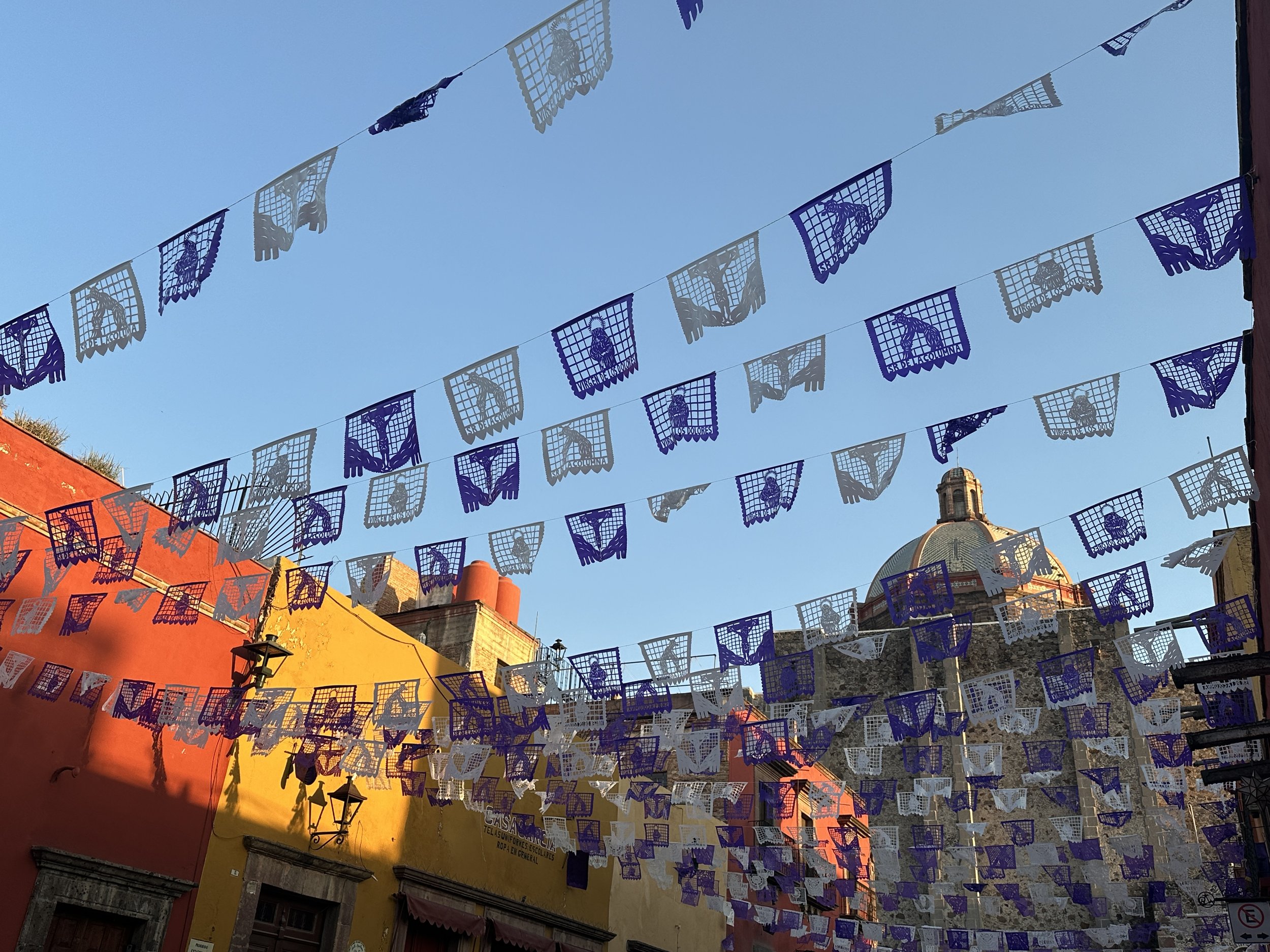
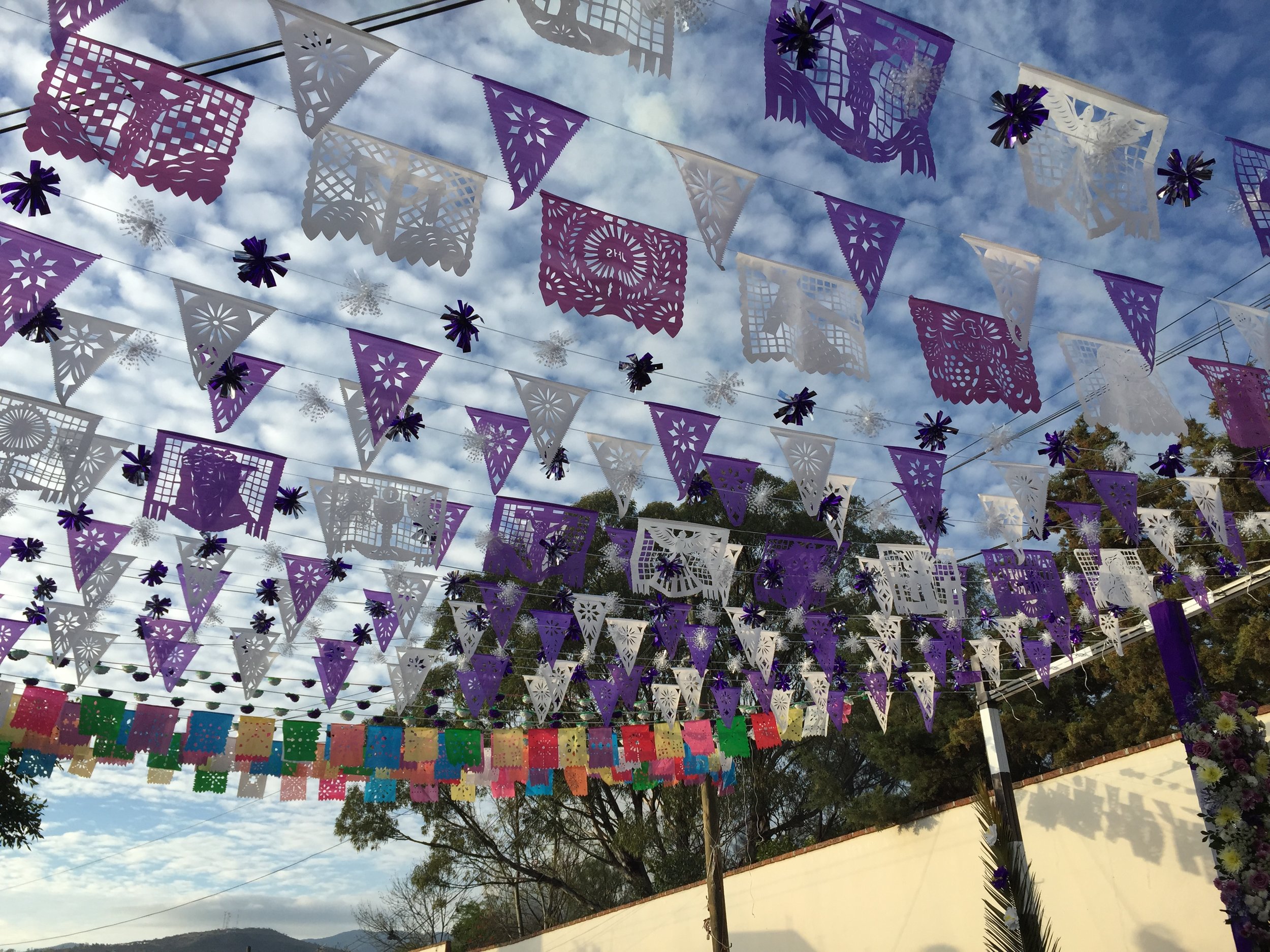
Not simply in churches or home altars, but also along streets adorned with paper flags, does the color purple emerge, mirroring the jacarandas while church bells ring. Jacarandas need not be “adorning” churches or fancy neighborhoods either. Contrasting with shacks or a car repair garage are some of the most glorious ones in town. After all, the distinctive chiming of church bells knows no boundaries. And, during Semana Santa, every day marks an event dating back centuries. For example, chamomile flowers were used in pagan rituals to enhance positive energy, joy and calmness. Like the bright orange, distinctively scented marigolds during the Dia de los Muertos, they yellow chamomile petals are also displayed, exuding a subtle scent.


Like Christianity, introduced to the New World from Europe, jacarandas were also imported but, in this case from South America. One person in particular, Tatsugoro Matsumoto, a Japanese imperial landscape designer was invited by president, Porfirio Diaz in the early 20th century to embellish Chapultepec and the Roma district in Mexico City where he founded a jacaranda nursery. Later, when asked to replicate Washington DC’s cherry tree allées (a former gift from Japan to DC in 1912), Matsumoto, an experienced horticulturist said: “no way”. A climate zone could not be altered by political decree…

Much symbolism resides in the color purple for both European royalty and Christianity. The combination of the two primary colors: red and blue, with red symbolizing sin and blue, purity, brings a transformation: redemption. For Catholics during Lent, purple is associated with penance, prayer and personal sacrifice. And while purple may signify pain and mourning, it is ultimately associated with the celebration of Christ’s resurrection. Particularly in Mexico, where the Virgin Guadelupe is highly revered, royal blue and amethyst purple dominate and are contrasted by pure white, aromatic Easter lilies.

Below: purple and white paper lace-like flags above cobblestoned streets.
Jacaranda petals atop an automobile window and windshield wipers

A Japanese young woman enjoying a view of jacarandas
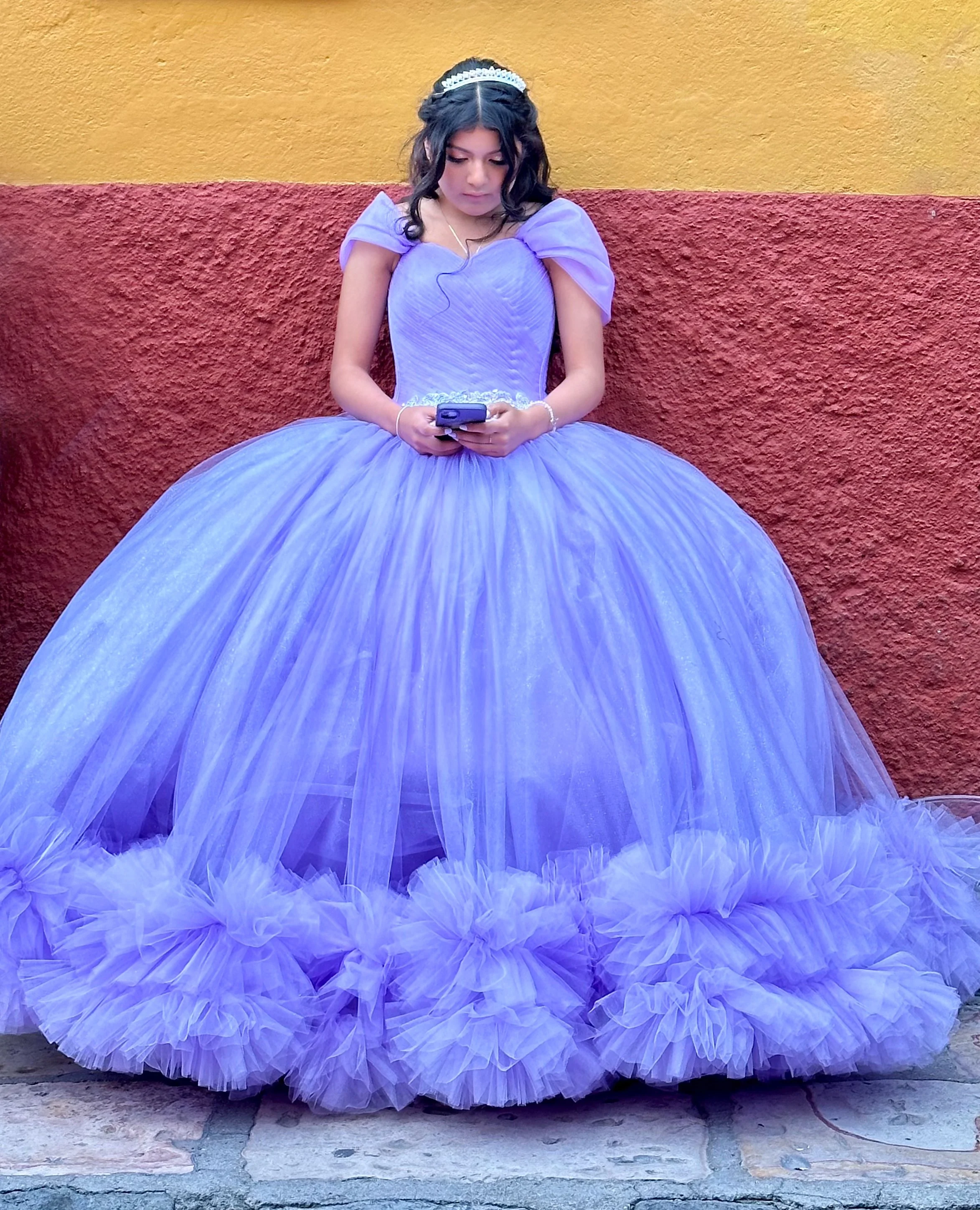
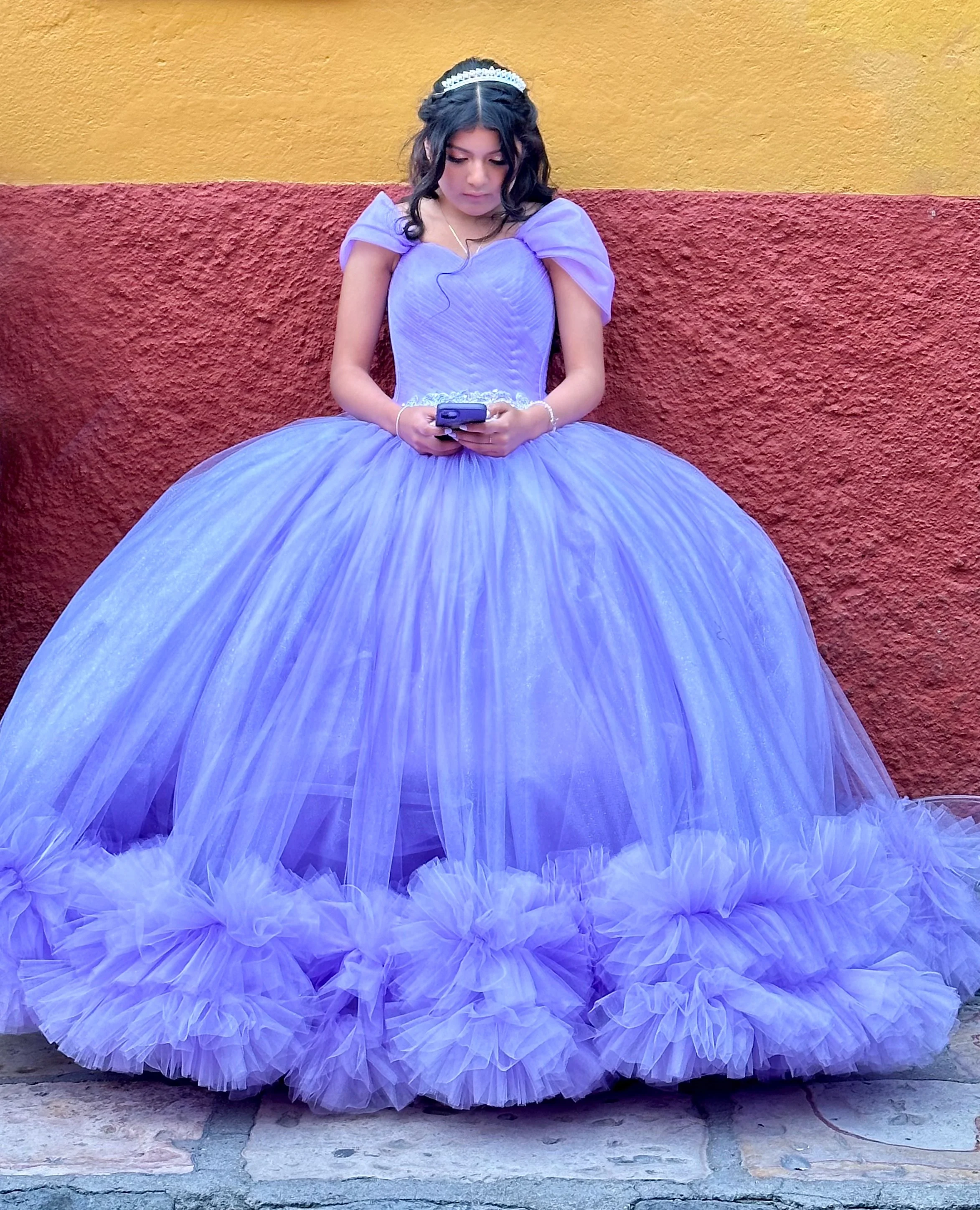
And, let’s not forget that one can indulge in a purple palette year-around as this young woman has chosen for her Quinciniera dress. Personally, as I head north, I look forward to lilacs in my backyard, which, unlike jacarandas offer an amazing aroma.
To read about Jacarandas in Mexico, City: https://www.nytimes.com/2023/03/25/world/americas/mexico-city-jacarandas.html?smid=nytcore-ios-share&referringSource=articleShare
To read more about the symbolism of red and blue:: https://www.honeysharp.com/journal/2018/12/9/red https://www.honeysharp.com/journal/2019/1/5/casa-azul-a-story-about-blue
