CATRINAS, MARIGOLDS AND ALTARS

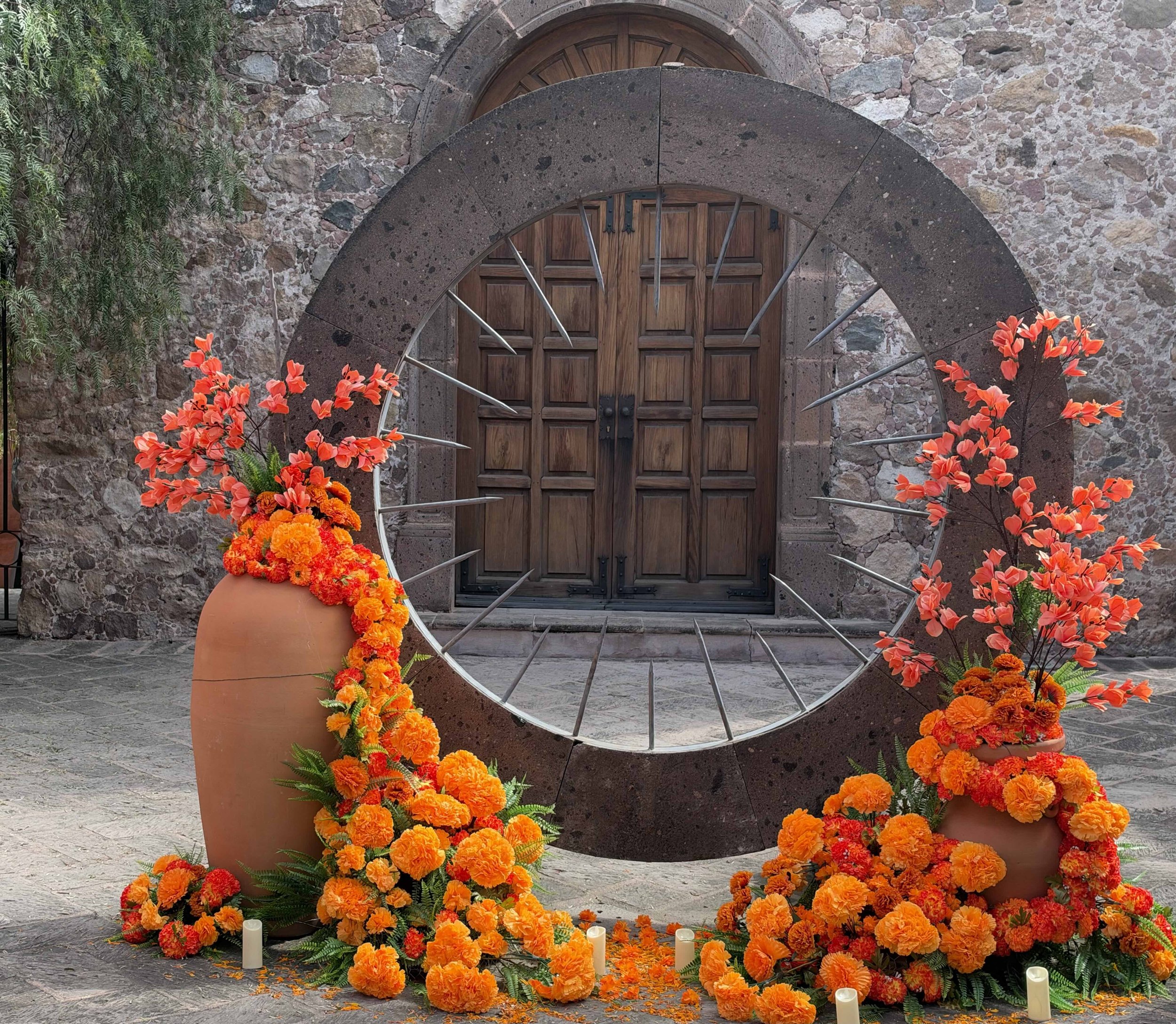

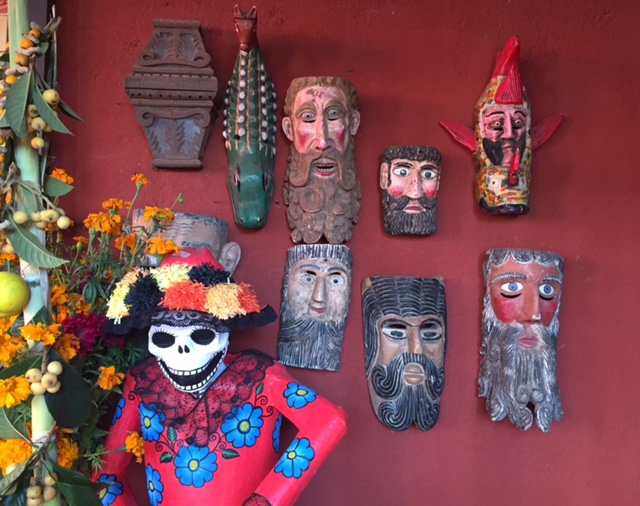
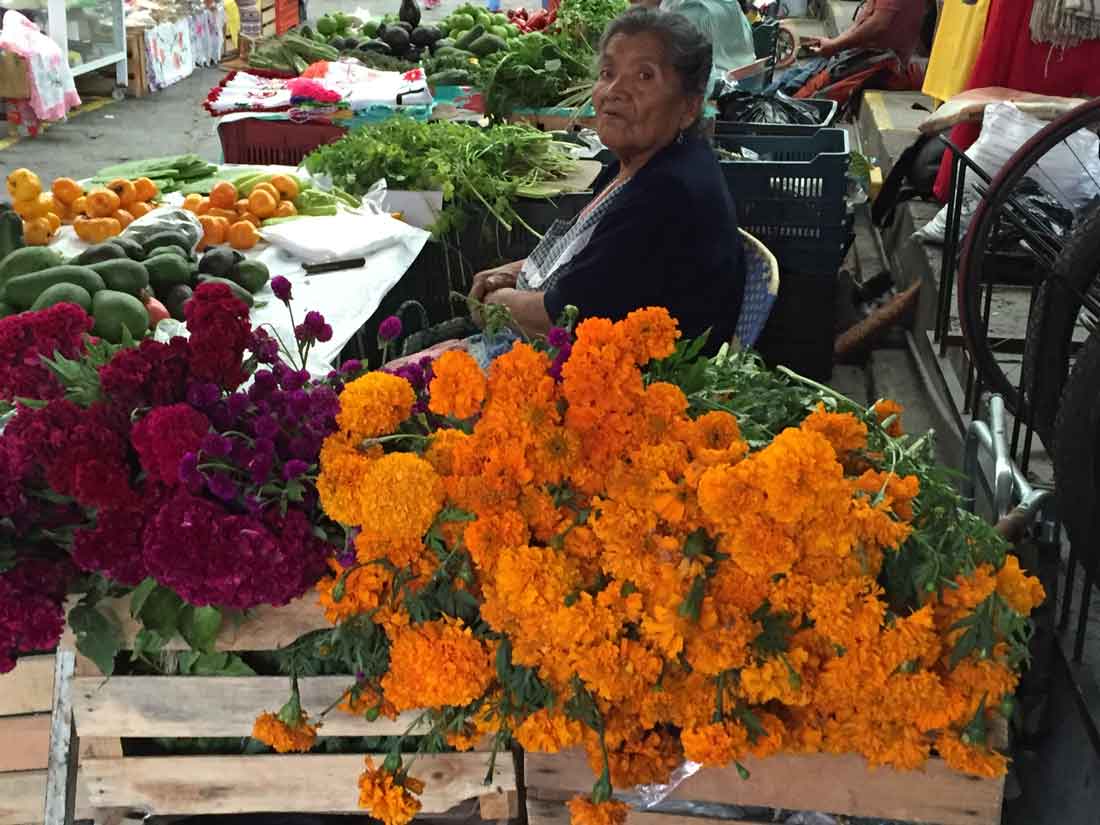
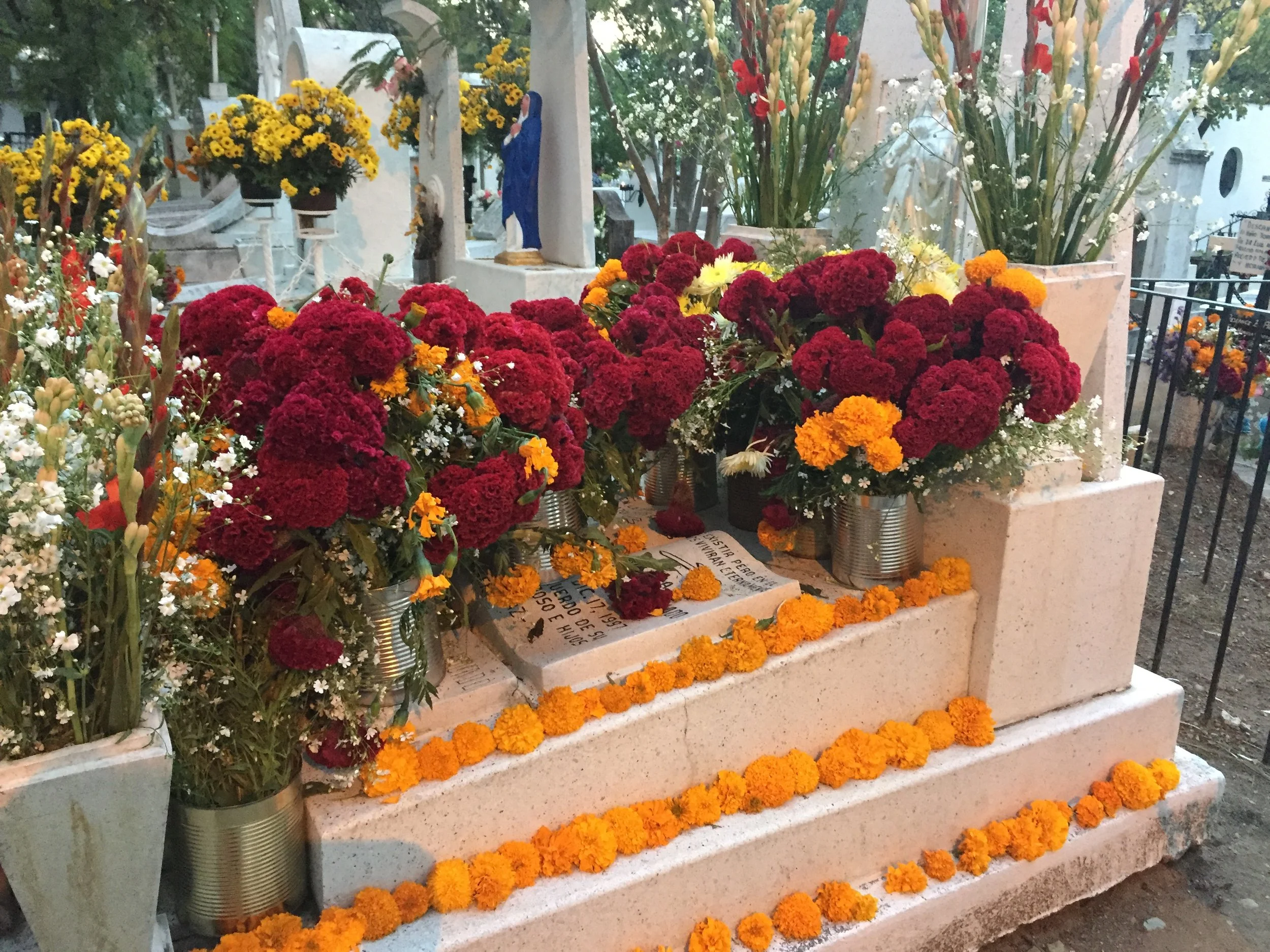
In Mexico, el Dia de los Muertos or the Day of the Dead, is a cherished time of the year. Considered a religious holiday, it is not only about death but, perhaps even more, life. It is a profound celebration of lost loved ones with roots in pre-Colombian culture.
While for Westerners, Halloween, or originally, Hallowed Eve takes place on October 31st, here it encompasses November 1st and 2nd. Reflecting both Mesoamerican and Western cultures, each day has a particular significance. With the more commercial October 31st including candies given to kids, the mosaic has grown even larger. Still, relatives and friends pay a visit to the cemetery while also inviting their loved ones to a candle-lit altar at home. Co-mingling with the living once again is the sincere hope — albeit for a brief moment.
As a lure a profuse plethora of ofrendas or offerings is assembled. Featured are bright orange marigolds or Cempasuchil in Nahuatl, as well as Cresta de Gallo or deep red cockscomb representing the blood of Christ. On the altar, images of the loved ones are surrounded by a generous offering of oranges, seeds, breads, ornate and colorful sweets, even tiny, fancy chairs. And, while a glass of water along with purifying salt helps the loved one on his or her journey between the two worlds, a shot of tequila won't hurt either, nor will a bottle of wine.
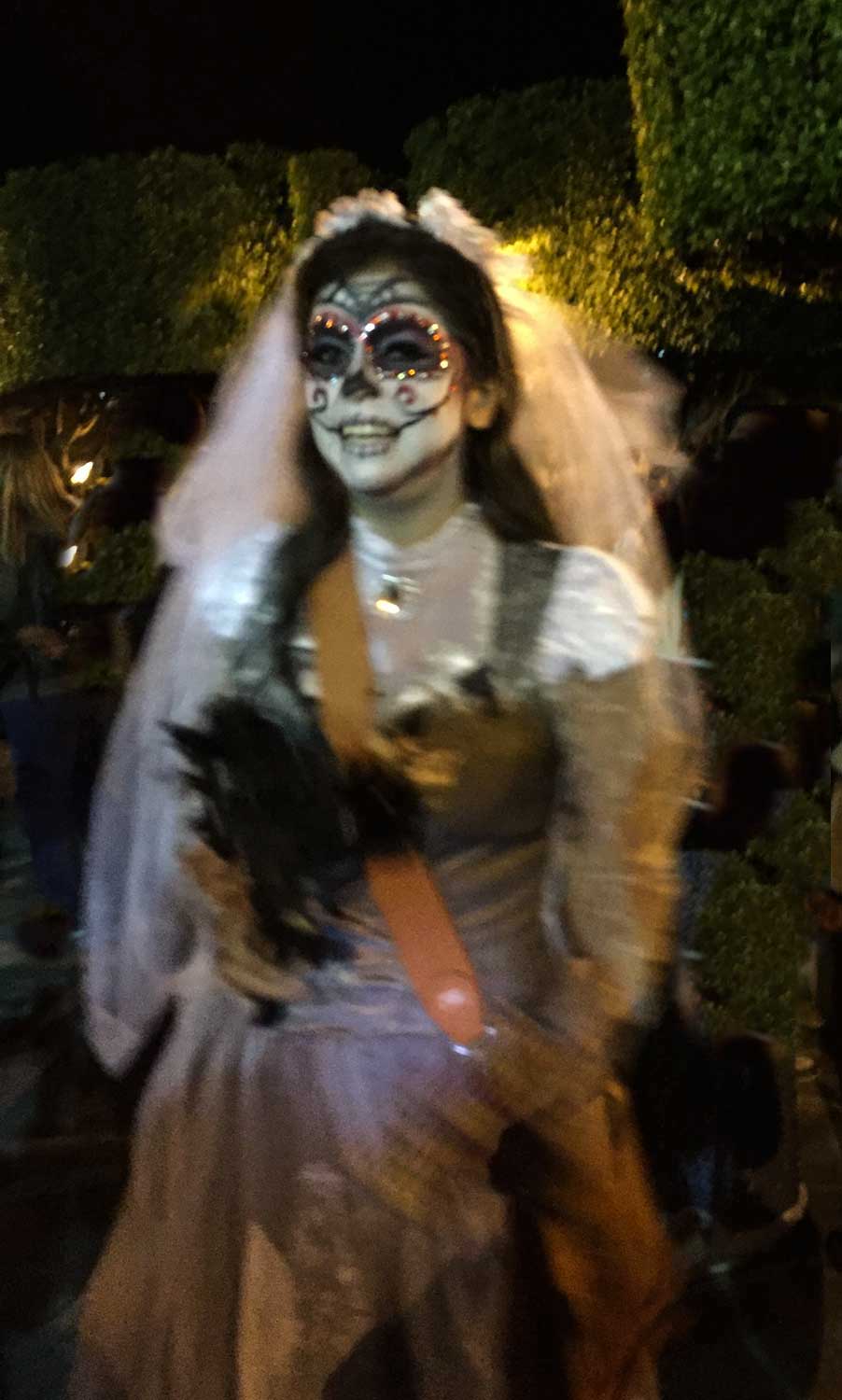


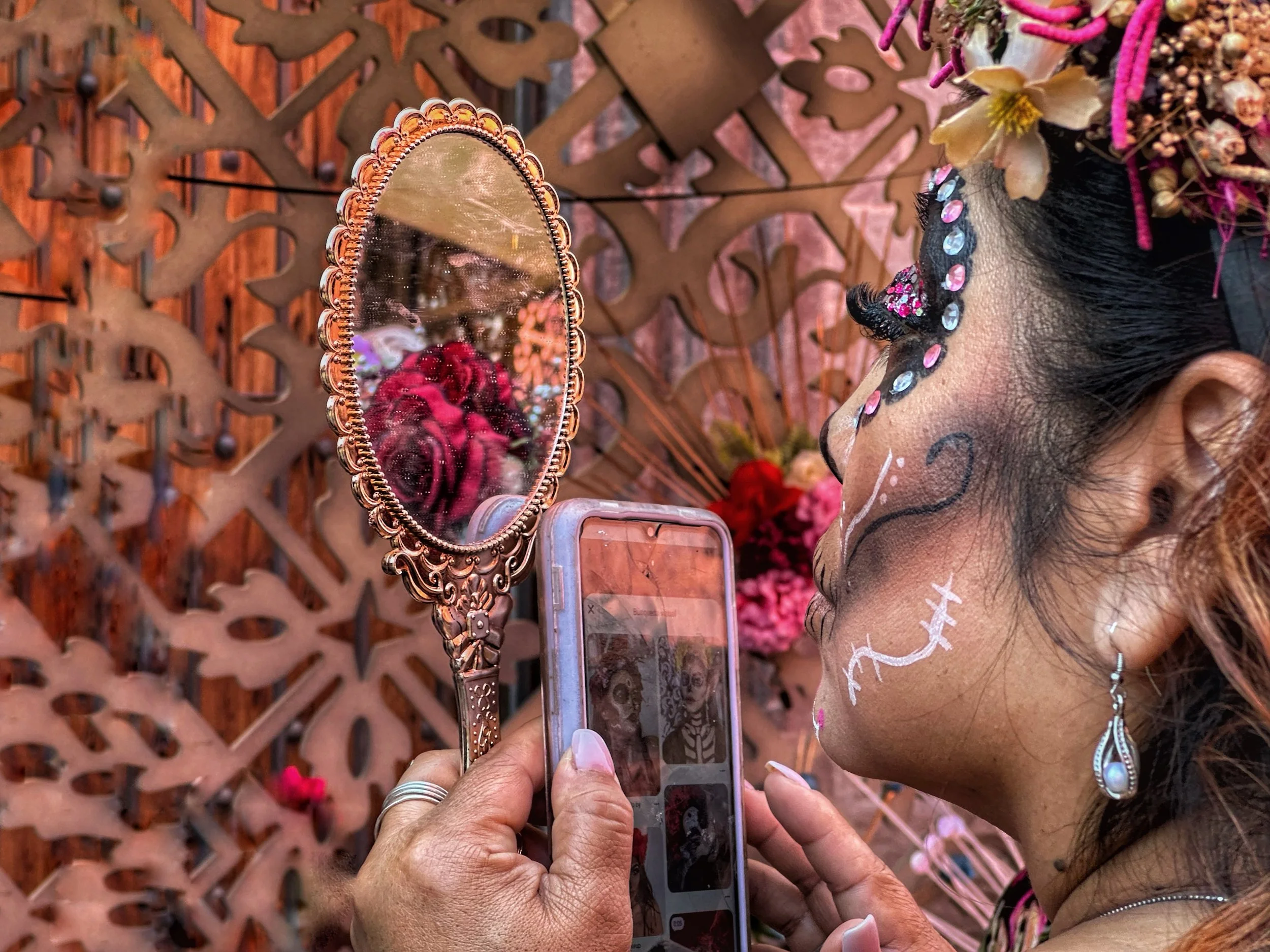
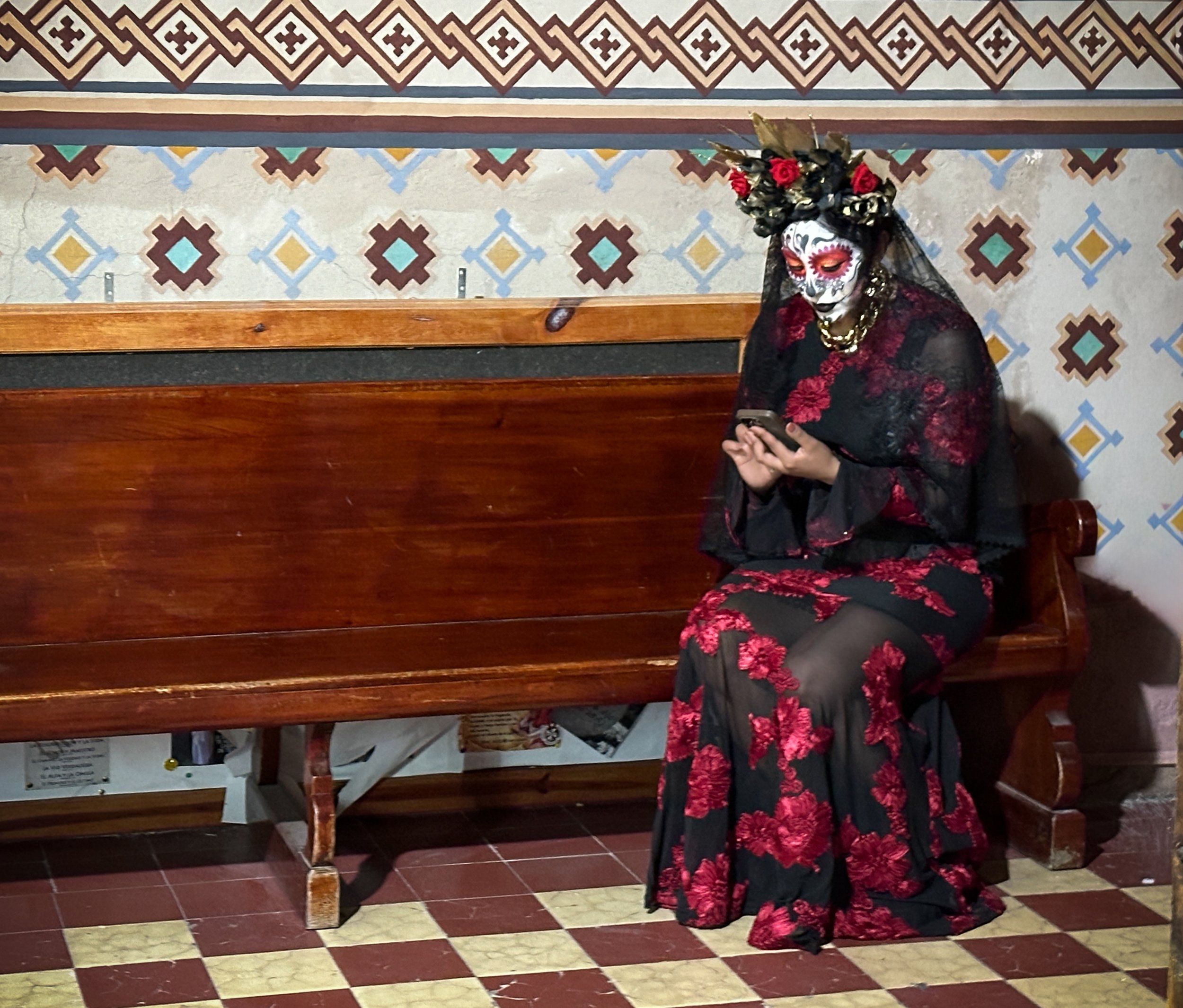
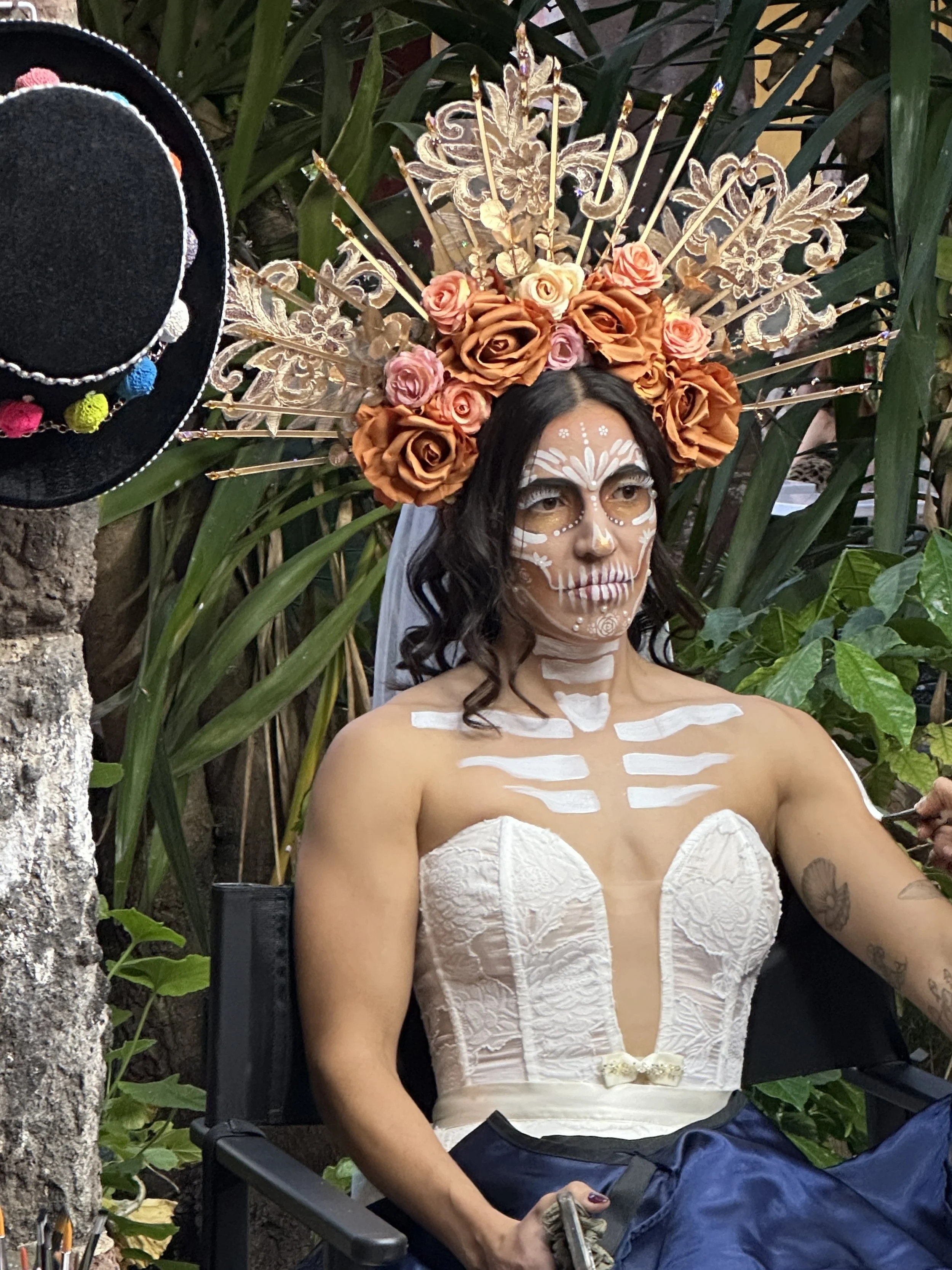
In typical Western tradition, Halloween costumes are fairly “standard” in appearance. However, in Mexico, the female Catrina, also known as La Calavera Catrina or the dapper female skull, comes out all dressed up in elaborate, sophisticated clothes. Here, in San Miguel de Allende's plaza or Jardin, one encounters them with their skeletal-like painted white and black faces all decked out in late 19th century lace and satin dresses. And, let’s not forget the veils, tiaras and fanciful hats.
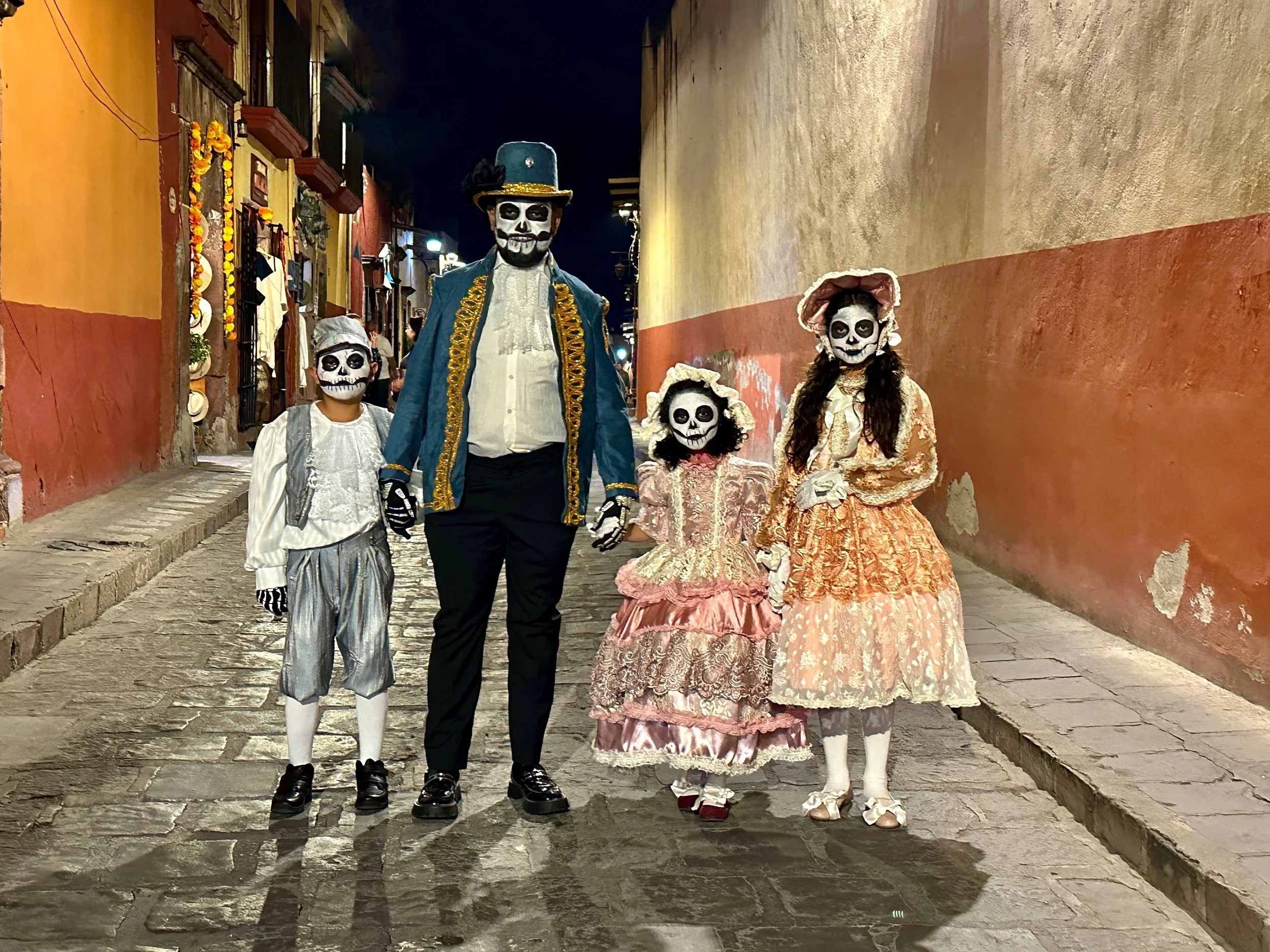
The male Catrin can also take part in the spectacle donning fanciful 19th century styled garb featuring a top hat and a cane as seen in the photo below with three children.
Ambling about town amid artistically designed altars with their ofrendas or offerings, makes for a theatrical experience only enhanced by performing mariachis. To top it off come the processions including one with costumed dogs. (In pre-Colonial times dogs were viewed as leading to the underworld, especially for a deceased child.)